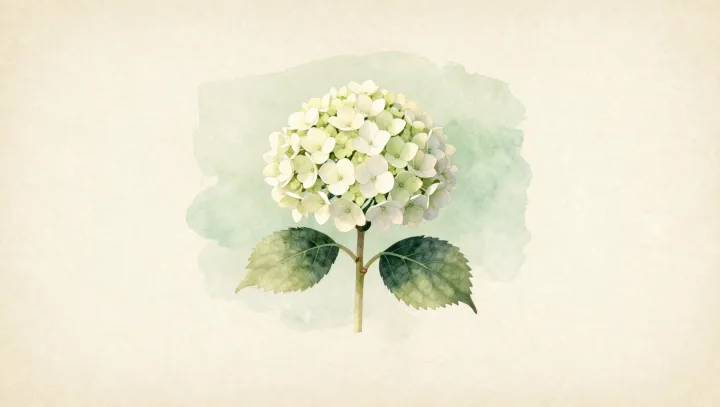
Hydrangea heads are a brilliant fraud. At close range, the broad colored surfaces that seize the eye are commonly enlarged sepals on sterile florets, while the fertile flowers, packed nearer the center of the inflorescence, offer pollen and ovules in forms almost too small for a casual glance. That mismatch made pictures easy.
Artists benefited from this botanical sleight of hand. A cluster gave illustrators a ready-made hierarchy: peripheral sterile florets supplied a clear contour and blocks of pigment, whereas fertile florets disclosed the reproductive machinery that a serious plate was expected to record. Nothing was hidden. Through calyx morphology and inflorescence architecture, the plant made its own diagram; the artist could show seduction at the margin and sexual function at the core without inventing a composition. Garden breeding sharpened the bargain. Cultivars with fuller sterile displays became durable ornaments, so collectors and painters encountered a form already selected for visual authority.
Beauty won by cheating. The sterile florets act less like reproductive advertisements than like frames around the operative flowers, extending visibility for pollinators while giving human viewers a bloom shape they can read from across a room. Pigments mattered too. Anthocyanin expression, altered by soil pH and aluminum availability in certain hydrangeas, supplied color shifts that made repeated study rewarding. Yet old plates preserve a quieter lesson: botany's famous blossom may be the plant part doing no seed-making at all.