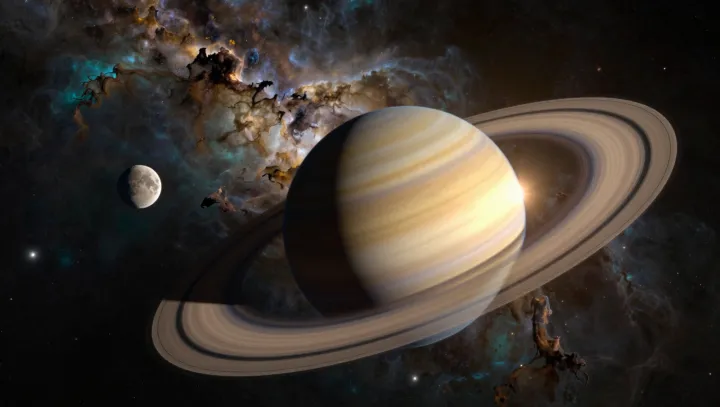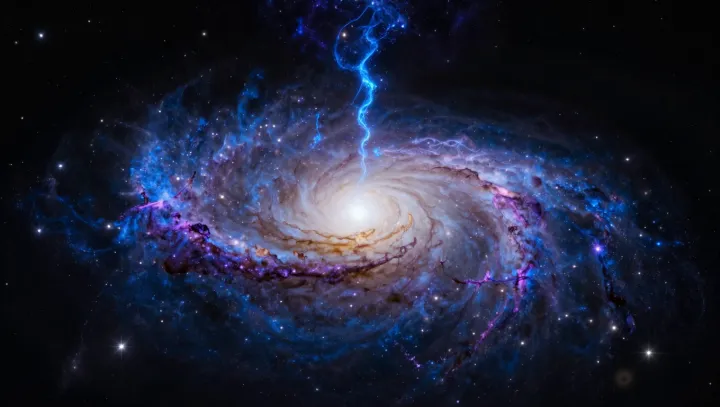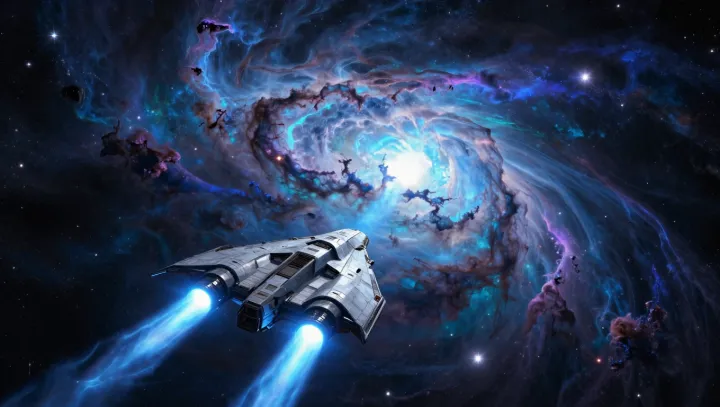
The spectacle deceives. A crimson veil spreads across a telescope frame, yet the apparent cloud is so attenuated that a probe could cross vast reaches before meeting another atom; only light, gathered over long exposures, gives the gas a bodily presence. Its color signals energy, not mass.
Density is the missing scale. In a diffuse nebula, number density can fall to only a few particles per cubic centimeter, while even the best terrestrial vacuum systems retain more matter within the same volume. That comparison bites. Nebular emission lines arise when ionized atoms and electrons recombine or undergo collisional excitation, releasing photons at precise wavelengths. Cloud, then absence. Only accumulated photons make scarcity impersonate substance.
The emptiness is almost insulting. A nebula can span light-years, and that reach turns trace gas into an image of weight, though its particle density remains below the most refined vacuum humans can sustain. Yet forces persist. Gravity, radiation pressure, and stellar winds can shape this thin medium because immense intervals allow minute effects to add up. A visual fraud. Brightness belongs to photons, while solidity belongs to the habits of the eye.