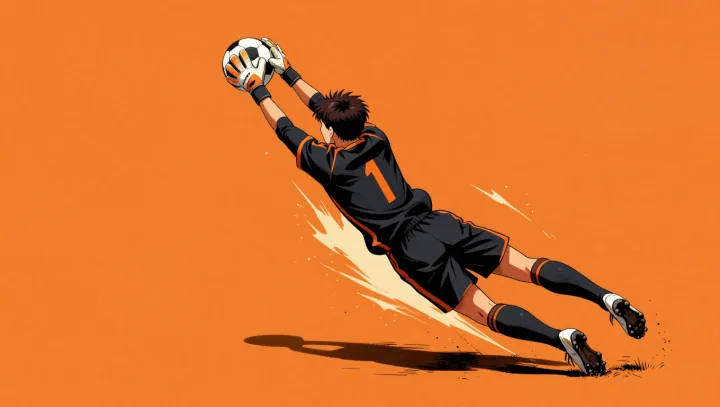
The ball tells the truth. It does not reward the keeper who looks airborne; it rewards the hand that meets its path before the spin can turn a near miss into a goal. Watch the gloves. A diving save starts with an estimate of line, pace, and bounce, then with a body arranged to put fingertips where the ball will actually arrive.
Distance is overrated. You can hurl yourself across the mouth of goal and still lose, because an extended torso may send the shoulder past the useful contact point while the palms arrive late or flat. Center-of-mass control matters. The push must shift mass sideways without destroying balance, and proprioception must keep the wrist, elbow, and shoulder aligned as the body rotates. Get that chain wrong. A hand can reach the ball yet merely redirect it into danger.
Control is the separating skill. You need a soft wrist at first touch, firm fingers behind the ball, and a forearm angle that absorbs momentum rather than turning the save into a rebound machine. Timing decides everything. Leave too early and the shot travels under you; leave too late and your reach collapses. Train the read. If you are teaching young keepers, measure clean catches, safe parries, and recovery steps before you celebrate how far they flew. What would you rather concede: style or space?