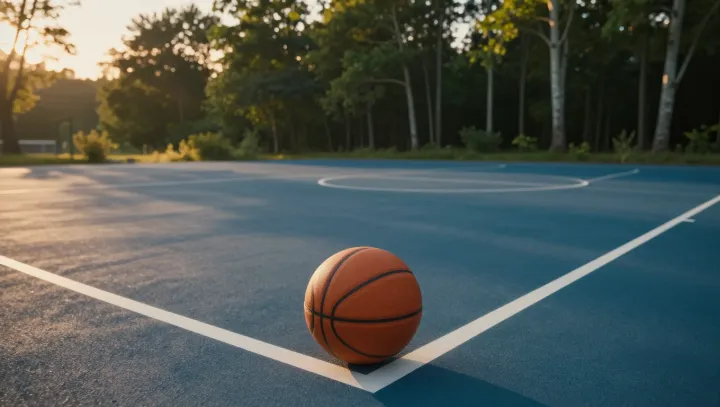
A lone ball tells. On an empty court or field, its rebound, roll, and spin expose every poor contact before an opponent can disguise the evidence. Solitude has value. It strips play to proprioception, force calibration, and visual pickup, letting an athlete notice whether the foot, hand, or racket met the ball too early, too late, too hard, or off-center.
Freedom builds control. Repeated, low-stakes touches give the nervous system a dense stream of error signals, so motor learning can revise an internal model without the panic that turns correction into mere survival. Pressure arrives later. By then, spacing has become a measured relationship among body, ball, target, and available time, rather than a desperate glance at whatever is nearest. Decisions get cheaper. In cognitive terms, predictive coding reduces uncertainty because familiar cues carry known consequences: a heavy bounce asks for retreat, a loose pass invites advance, and an awkward angle narrows the safe option. The cerebellar forward model behaves like a background process, comparing expected sensory feedback with actual feedback and adjusting timing before conscious thought catches up. That is rehearsal, not magic. When defenders, noise, fatigue, and scoreboards crowd the scene, the player has more than cleaner technique; the player has spare processing capacity. The extrapolation is plain. Practice alone can turn control from a fragile reaction into an automated system that keeps computing when the match becomes hostile.