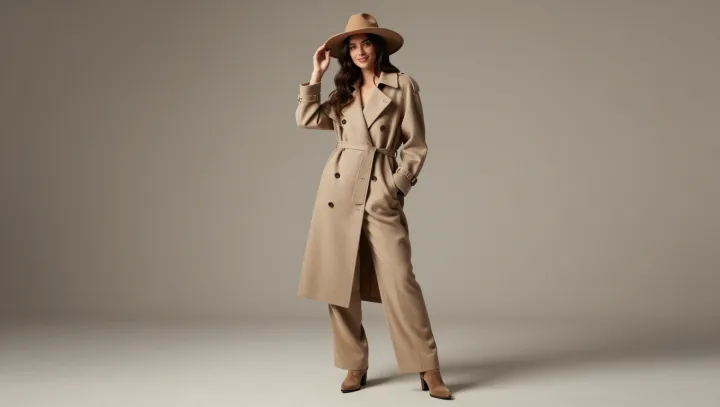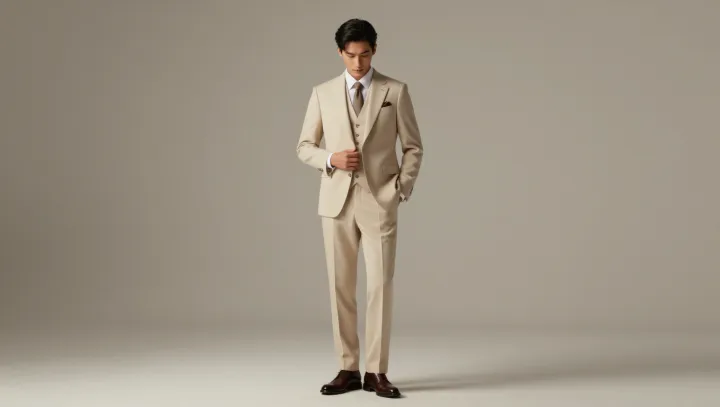
Cream cloth catches light before its wearer speaks, and that is precisely why a lowered gaze can change its social meaning. The suit advertises care, cost, and formality; the body quietly edits the claim. The effect is real. What might read as rank instead reads as restraint.
The reversal is not magic. In thin-slice perception, observers infer status from compressed visual evidence, and postural expansiveness, sustained eye contact, and a lifted chin commonly raise impressions of agency and control. Dominance signaling works fast. A downward gaze and loose shoulders can dampen that reading, making polished clothing appear less like armor and more like an invitation. Context still matters: too much withdrawal may suggest discomfort rather than ease.
The lesson is mildly subversive. Clothing is not a fixed declaration of class or power; it is a negotiation between fabric and physical claim. Cream, with its visibility and ceremonial associations, can sharpen that negotiation. When the wearer occupies less space, the suit retains its discipline while surrendering some distance. The eye catches the pale cloth, then finds a person who does not insist on being above the room.