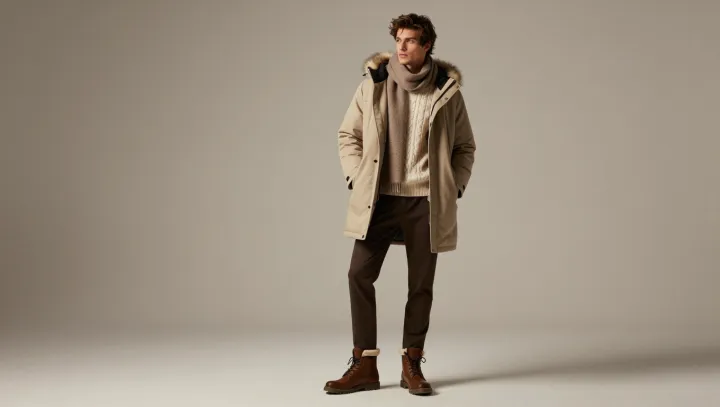
The gaps win warmth. A cable-knit layer, its raised ropes bordering small hollows, can hold still air close to the torso, while a coat that merely looks bulkier may compress its fill, admit drafts at cuffs, or conduct heat through dense fibers. The eye reads volume; the body reads resistance to heat flow. That mismatch is winter clothing's oldest misdirection. Appearance, in clothing, is a poor thermometer.
The physics is stubborn. Air has low thermal conductivity compared with most textile fibers, so trapped pockets slow conduction from warm skin toward cold surroundings; the knit's uneven geometry also restrains convection, provided its openings are not broad enough for air to circulate freely. This is not a trick of yarn alone. Bulk can deceive: dense material may add weight while leaving less dead-air space, whereas a lofty structure insulates with less apparent thickness and without the same burden.
Fit is the quiet judge. A cable-knit garment works best beneath an outer layer that blocks wind without crushing the knit, because compression erases the air cells doing the work and wind restores convective heat loss. Moisture complicates the bargain: water displaces air and carries heat away more readily, which is why a soaked sweater feels so disappointing. The coat still matters, especially in rain or severe cold, but its value lies in protecting that fragile internal climate and reducing radiative loss. Between skin and weather, the rare luxury is air that refuses to move.