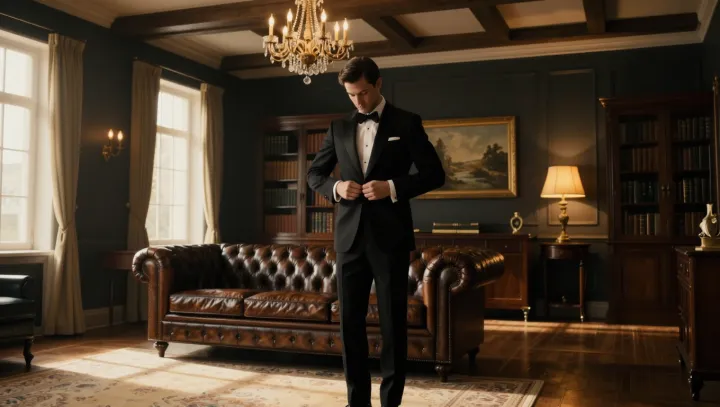
Warm light gets credit. Its amber pool catches a black tuxedo's sharp lapels, while the room's softened edges make expense look like inheritance rather than display. Nothing here is noble. Yet the image works because it borrows a disciplined visual grammar: ceremony, limited access, and refusal of excess.
Status is rehearsal. A tuxedo carries force not through its wool alone, but through dress codes that rationed entry, demanded tailoring, and punished improvisation. Scarcity does the rest. In signaling theory, costly signals persuade when imitation has a price; formalwear asks for money, fit, occasion, and the confidence to appear unhurried. Positional goods matter. Their value rises when access remains socially narrow, so the garment converts constraint into apparent ease.
Restraint is not modesty. It is social accounting, in which the wearer declines louder proofs of wealth because established codes have already done the announcing. The room joins in. Low illumination hides minor flaws, concentrates attention on silhouette, and supplies the hush of guarded invitations. Bright showrooms advertise purchase. Shade, by muting proof and concentrating silhouette, suggests that purchase needs no defense. This is not magic. It is visual inheritance, making privilege seem less bought than absorbed.