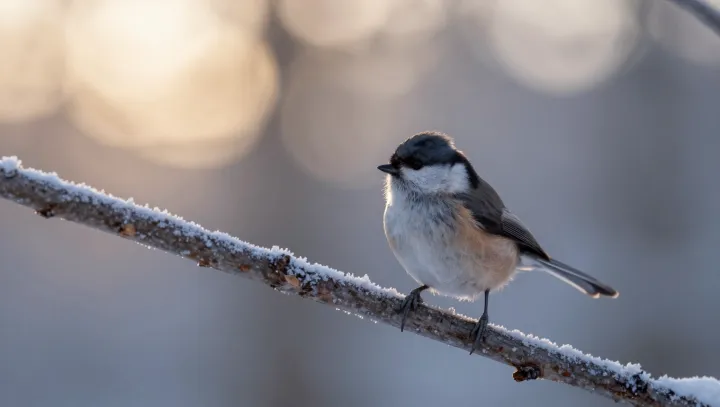
Hardiness is the wrong story. On a snowy perch, the tufted titmouse does not defeat cold through grit; it reshapes its feather coat, trapping still air beside skin while a body smaller than your hand guards a narrow reserve of heat. The bird looks puffed up. It is doing physics.
Air, not feather itself, does most of the work. Through ptiloerection, tiny muscles lift the contour feathers and thicken the insulating boundary layer, slowing convection as wind tries to strip warmth away. Heat loss falls. The effect also limits conductive transfer where the bird presses its feet against a frozen branch, while its tucked posture reduces exposed surface area. Nothing here is decorative.
Metabolism remains the costly backup. A titmouse can generate heat through shivering thermogenesis, but calories are finite when insects are scarce and daylight offers little margin for waste. Rest helps. So does shelter, communal roosting when available, and the plain discipline of moving less during bitter spells. The perched bird is not a tiny hero enduring punishment; it is a compact system defending temperature, one trapped pocket of air at a time. Snow gathers. The small furnace holds.