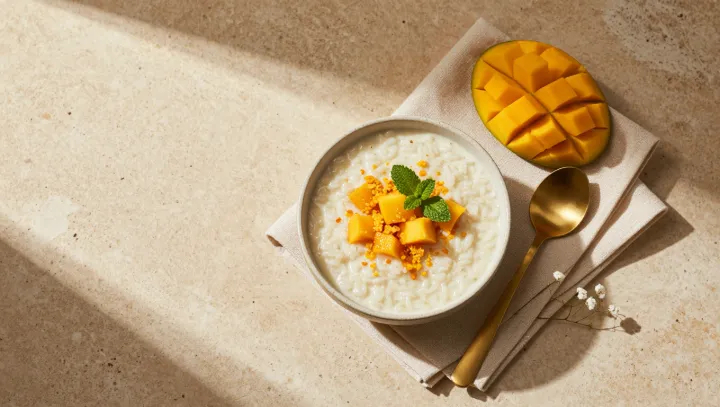
Mango is the clever accomplice. Against chilled rice pudding, its perfume can make dairy seem more lavish, although the fruit adds little fat: volatile esters and terpenes travel by retronasal olfaction, where the brain combines aroma with sweetness, texture, and the milk fat already in the bowl. Because aroma reaches the nose from the mouth, its impression can outlast the fruit itself.
Cold is a thief. It mutes many odor molecules and dampens sweetness, so plain pudding can seem quieter than it is; mango restores drama through a high-aroma profile, while its sucrose gives an immediate sweet signal that makes the custardy base read as fuller. The acid matters too. By sharpening contrast and encouraging salivation, it keeps fat from seeming flat, making each creamy note easier to notice. Pulp changes the case. Ripe mango puree carries pectin and soluble fiber, which add viscosity and a faint coating sensation without adding cream.
Color cheats, a little. A golden puree primes expectations of ripeness and abundance before the first bite, and expectation is part of flavor perception, not mere decoration. Expectation enters early. That visual cue can bias reported creaminess when pale rice meets bright fruit, a form of crossmodal integration. Nothing is added. On the cold spoon, fruit and milk borrow each other's costumes, and richness becomes less a substance than a verdict.