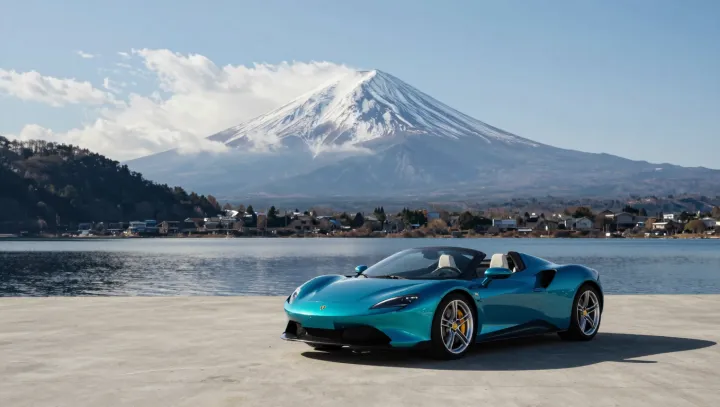
A long hood, low roof, and taut tail make a grand tourer look ready to attack a circuit, yet that posture serves a calmer mission. Speed needs less drama. By reducing frontal area and managing airflow beneath the floor, designers cut aerodynamic drag and lift, allowing high cruising speeds without the fuel burn or steering corrections that tire a driver.
Pure stiffness is often a trap. A track car uses high spring rates and firm damping to control transient weight transfer during braking, turn-in, and corner exit, where lap time rules every compromise. Public roads impose another physics problem: broken surfaces create vertical acceleration, upsetting tire contact patches and sending impacts through seats, pedals, and steering columns. A grand tourer therefore seeks controlled compliance. Adaptive dampers can soften compression over sharp edges while retaining rebound control, and compliant bushings filter vibration before it becomes cabin noise.
Length earns its keep. A longer wheelbase reduces pitch motions over crests and dips, while giving engineers room for larger fuel tanks, useful luggage space, and seating that does not force occupants into a racing crouch. Torsional rigidity still matters, because a flexing structure confuses suspension tuning, but rigidity is not the same as brutality. The best grand tourer treats NVH as a tax to be managed, not a badge of honor. Its low body promises velocity; its measured softness makes that velocity livable.