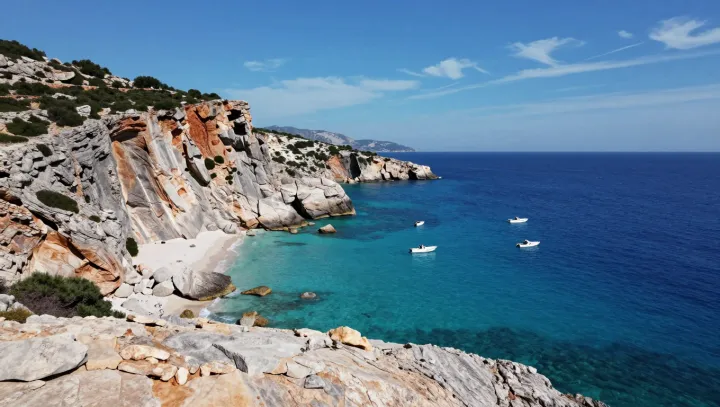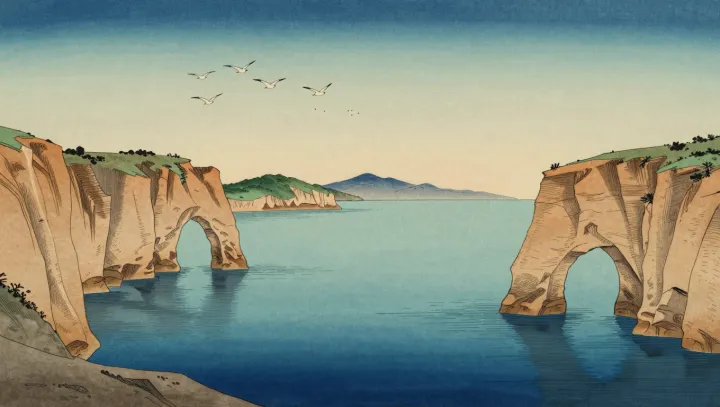
Flat blue meets a sliced coastline, and the European window onto space begins to look less like nature than habit. That was the shock. Woodblock prints made the picture plane a designed surface, where contour, unmodulated pigment, and blank intervals held force without the usual machinery of modeled depth.
The provocation was structural. By cutting boats, bridges, and bodies at the frame, prints rejected the centered scene and made selection itself visible; what lay beyond the edge mattered as much as what remained. Cropping became an argument. So, too, did oblique viewpoint and abrupt scale, devices that weakened linear perspective while lending streets, weather, and water visual pressure. Separate color blocks and registration rewarded choices that were clean, repeatable, and graphic; tonal haze had no monopoly on atmosphere.
Modern painting gained permission. Impressionists and Post-Impressionists saw that color need not describe volume before it could organize attention, and that a view need not behave like a stage set to feel convincing. Motifs were beside the point. Circulation mattered too: affordable sheets moved this visual grammar into studios, where painters tested it against oil, canvas, and urban speed. The transferable lesson was formal economy: broad chromatic fields, emphatic outlines, and asymmetrical framing could make perception feel immediate rather than complete. At the frame's edge, painting found a door: not onto more scenery, but into the act of seeing.