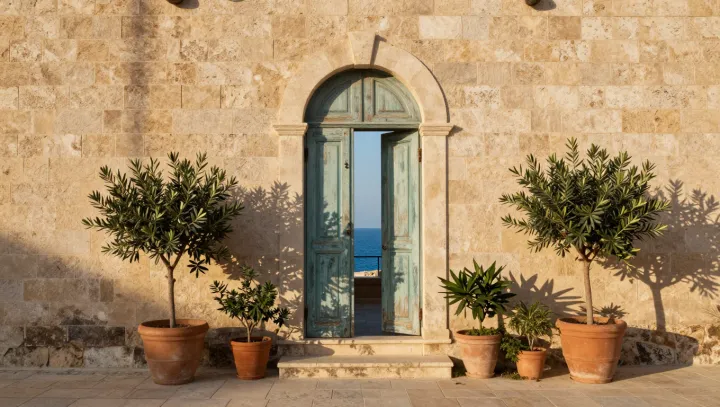
The wall is no relic; it is thermal machinery dressed in stone. At noon, its mass absorbs heat slowly through conduction, delaying the indoor peak until outdoor air has cooled. The room stays steadier. Thick masonry does not create cold; it buys time, which is often the whole game in a hot climate.
Shutters are the sharper tool. Exterior panels block shortwave solar radiation before it crosses glazing and becomes longwave infrared energy indoors. Close them before the sun reaches the facade. Then open them after the air cools, when cross-ventilation can flush stored heat and the stack effect can draw warmer air upward. Timing beats gadgetry. A shutter closed too late merely seals in a room already loaded with heat, while one used well turns a window from a heat collector into a controlled valve.
The old system wins by refusing a bad bargain. Stone works through thermal lag: heat enters slowly, then leaves slowly, allowing a diurnal cycle to move unwanted warmth outward at night. No wires. No compressors. This is not magic, however; humid nights, poor orientation, thin walls, and sealed rooms can blunt the result. At dusk, closed shutters and a patient wall turn a building into an argument with the sun, and sometimes the wall has the last word.