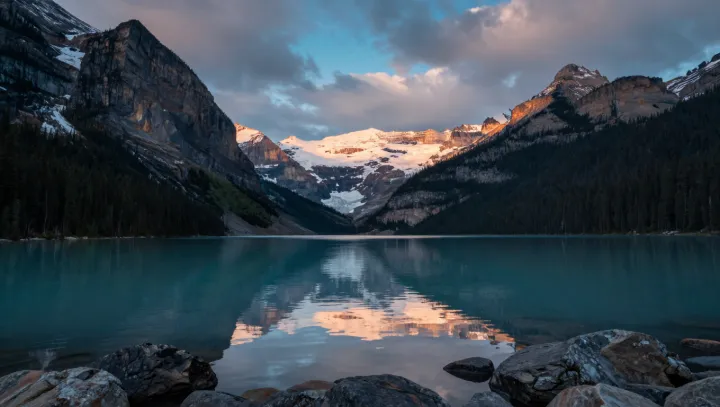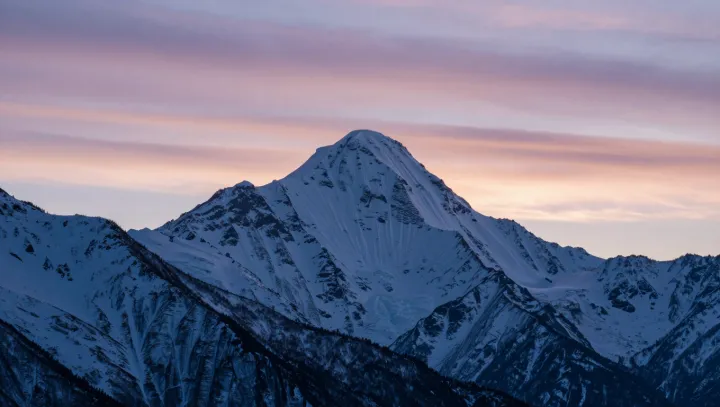
The summit was seabed. Marine fossils on high mountains are not evidence that oceans once reached their present altitude; they reveal that rocks can travel upward as Earth's crust deforms. Geography is no guarantee. In the Alps, limestone containing remains of sea creatures records environments that existed before plate collisions folded and raised the rocks into mountain ranges.
Stone preserves the reversal. When marine organisms died, their shells and skeletons sometimes accumulated in sediment, where burial protected some remains from scavengers, currents, and decay. Most remains disappeared anyway. Over successive layers, pressure and mineral cement converted loose sediment into sedimentary rock through lithification, preserving shells, impressions, or mineral replacements rather than necessarily retaining the organisms' original material. The mechanism is unromantic. Plate tectonics then supplied the transport: as plates converged, compression shortened the crust, while folding and faulting stacked and displaced rock layers that had formed beneath water. Mountains inherited the cargo.
Height can mislead badly. A fossil's present elevation does not measure the depth of its former sea, because tectonic uplift, erosion, and movements along faults can alter its position long after burial. The details still matter. Geologists examine fossil species, sediment textures, and surrounding rock layers to distinguish shallow tropical waters from deeper marine settings and reconstruct how those deposits became mountains. Not every peak qualifies. Many mountains consist largely of volcanic or metamorphic rocks, where marine fossils may never have formed or may have been destroyed by heat and pressure. Above the clouds, a shell can still hold the shape of a vanished shore.