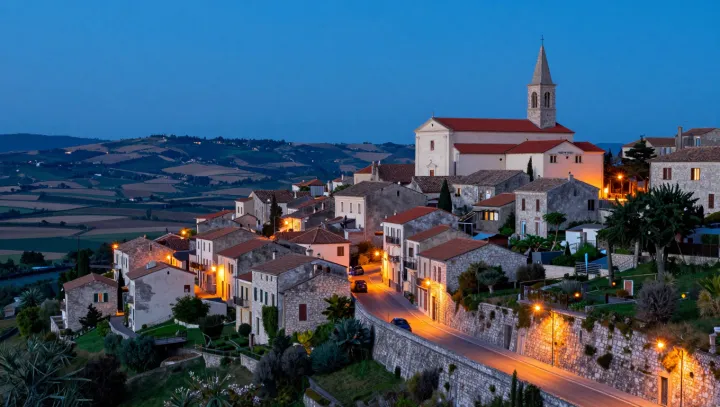
Tuscany's wildness is an illusion. Behind the vineyards, olive groves and cultivated hills lies a countryside that farming has repeatedly remade, with boundaries and planting patterns shaped by livelihoods rather than nature alone. Beauty had a workload. What appears effortless from a roadside viewpoint is the accumulated result of clearing, pruning, planting and harvesting.
The postcard conceals an economy. Under sharecropping, landowners and tenant households divided agricultural output, while farms often combined grain, vines and olives rather than depending on one crop. Variety served practical ends. This polyculture spread production across different foods and seasons, helping households meet needs that a vineyard alone could not satisfy. Order was never accidental. Field divisions, farmhouses and access tracks reflected the organization of work, while terraces and retaining walls helped make sloping ground cultivable. Not every hillside followed the same pattern, but the rural view emerged from decisions about production, ownership and survival.
Preservation is not mere protection. As machinery, markets and rural employment changed, some farms consolidated fields or specialized production, while cultivation retreated from other sites where the labor no longer paid. Abandonment changes the picture. Without cutting, grazing or cultivation, shrubs and woodland can reclaim open ground, replacing the views visitors often mistake for nature left alone. Continuity therefore requires choices. Keeping terraces repaired and groves productive means supporting work, not simply preventing construction or declaring a view beautiful. The paradox sits quietly beside the road: the olive tree looks timeless because someone keeps returning with a saw.