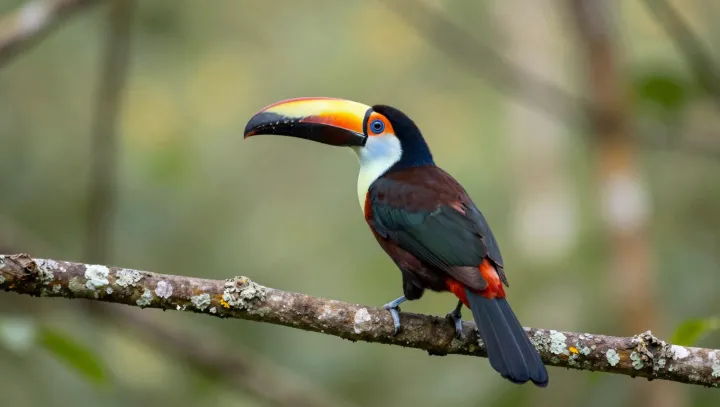
A toucan's bill is less a burden than a bargain: it gives the bird a long reach without the weight its size might suggest. That reach matters. From a perch, the bird can pluck fruit from branches that might not support its body, then manipulate the food with the bill's edges and tip.
The bill's second job is harder to see but just as useful. Beneath its keratin surface lies a network of blood vessels, and changes in blood flow turn the bill into a controllable heat exchanger. When the bird is hot, vasodilation sends more blood toward the surface, where heat can pass into cooler air. When temperatures fall, vasoconstriction reduces that flow, helping the bird retain warmth. Blood carries the heat. The bill does not generate cold; its effectiveness depends partly on the temperature difference between its surface and the surrounding air.
Size, in this case, need not exact a heavy price. The bill's internal structure includes a lightweight framework, while its broad surface offers space for heat exchange as well as leverage for feeding. Such an arrangement does not explain every detail of its shape: display and other pressures may also have played a part in its evolution. The trade is subtle. At rest among leaves, the toucan carries an extravagant outline that is also a piece of practical economy.