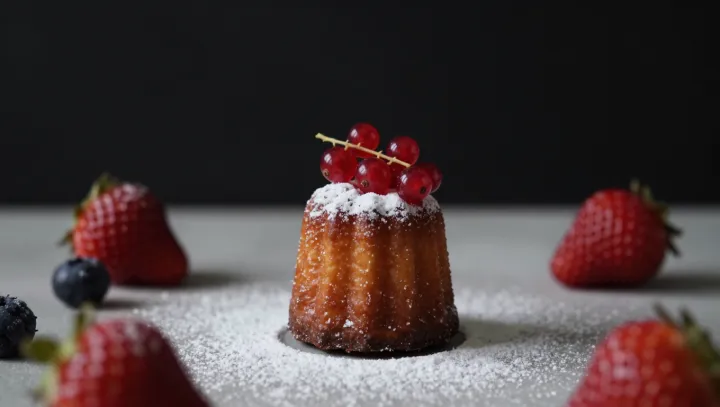
The prettiest part of a fluted cake is also its greatest liability: every ridge that gives the crust its shape offers another place for the cake to cling. The bargain is visible. Beneath powdered sugar and red currants, the cake carries the imprint of a pan that must eventually let it go.
A fluted pan does more than lend the cake a pleasing outline. Its metal conducts heat into batter wherever the two meet, while the ridges create a pattern of raised and recessed surfaces that sets as the cake bakes. Browning follows contact. Near the hot pan, moisture evaporates and the Maillard reaction produces browned flavors and color, although the result depends on the batter, pan and oven. The grooves can make browning uneven: narrow details may darken before thicker portions of the cake are fully baked.
Release is a problem of geometry as much as adhesion. Batter that settles into tight corners can bake firmly against them, and a delicate ridge may tear when the cake is turned out. Preparation matters here. A thin, thorough coating of baking fat, brushed into every recess, helps separate cake from metal; a light dusting of flour can provide another barrier when the recipe calls for it. Letting the cake cool briefly in the pan gives its structure time to firm, though leaving it too long can make release harder. A careful inversion reveals whether the bargain has held: intact ridges beneath sugar, currants above, fresh berries waiting alongside.