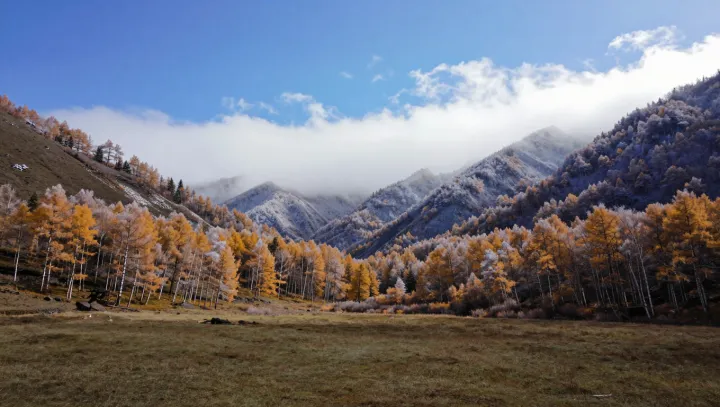
Snow on a summit does not mean autumn has deserted the forest below. The mountain keeps two clocks. Air generally cools with elevation, allowing precipitation to fall and remain as snow on upper slopes while lower ground stays warm enough for trees to hold their golden leaves.
Height is the blunt instrument in this seasonal split. Under average conditions, the environmental lapse rate describes a temperature drop of about 6.5 degrees Celsius per kilometer of ascent, though the actual rate varies with weather. That difference can put high slopes below freezing while valleys remain above it. Snow needs more than cold air. Moisture and precipitation must also arrive, and fresh snow can melt quickly if the ground or air warms.
Day length tells a subtler story. Photoperiod helps many deciduous trees detect the approaching dormant season; as nights lengthen, leaves break down chlorophyll, exposing yellow pigments called carotenoids. Temperature, moisture and species also affect the timing and intensity of color, so leaves do not turn on a single schedule. A frost can hasten leaf loss, but it is not required for gold to appear. On the mountain, then, white and gold share the same light but answer to different conditions. Their meeting is brief, and neither color knows the other is there.