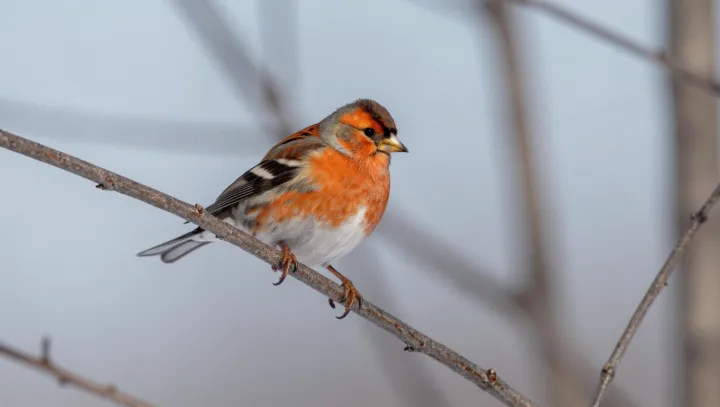
The male brambling's black head is less a new outfit than a reveal. As breeding approaches, pale edges on its existing head feathers wear away, exposing the dark portions beneath. No fresh coat is needed. The transformation makes a familiar winter finch look remarkably different when it reaches its northern breeding grounds.
Feather wear is an economical form of disguise, though it works by subtraction rather than active color change. The feathers contain melanin, the pigment responsible for their dark areas; lighter tips initially conceal much of that black. Over time, abrasion removes those tips and the darker feather surfaces become more visible. The bird does not need to manufacture black pigment in the feathers already on its head, which are dead structures once fully grown.
The contrast matters beyond the crown. An orange breast, patterned wings and white rump help distinguish the brambling, a migratory finch that breeds across northern Eurasia and moves south for the nonbreeding season. Males and females differ in appearance, and seasonal plumage can complicate identification. A winter bird may carry the evidence of its breeding colors under a veil of pale feather edges. By the time those edges have worn away, what seemed like a change of wardrobe is the gradual disappearance of a mask.