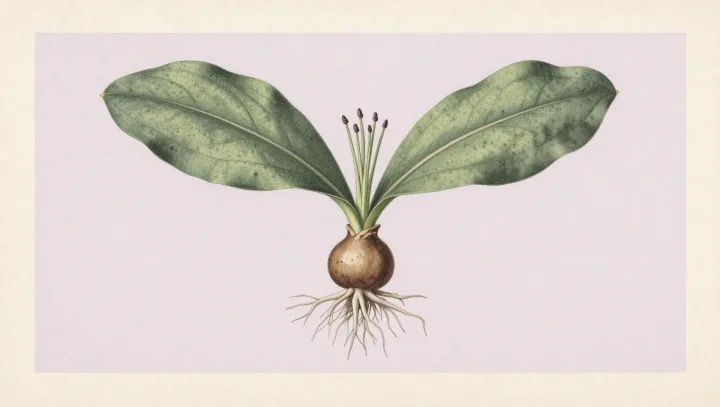
Massonia depressa has made an unusual bargain: it offers a meal to rodents in exchange for sex. Its flowers sit almost at soil level, between two broad leaves pressed against the ground, where a foraging mammal can reach them without climbing. The arrangement is no accident of appearance.
Scent does the advertising. The southern African bulb produces a compact cluster of flowers with a yeasty odor that can draw rodents searching for food. The reward is nectar, but not the watery kind associated with many flowers. Its remarkable viscosity gives it a consistency that researchers have compared to jelly, making it available for rodents to lap up. Thick nectar may also be less convenient for some insects to collect, although the plant's visitors and their effectiveness can vary with local conditions.
The payment comes with a catch. As a rodent feeds, its muzzle brushes the anthers, picking up pollen; at another flower, some of that pollen can reach the stigma and allow fertilization. This is pollination by mammals, with the flower's low position placing its reproductive structures directly in the animal's path. Nectar supplies energy, while its thickness changes how the reward can be handled. Neither scent nor a meal guarantees that pollen will reach another plant, but together they bring a suitable visitor into contact with the flower's reproductive parts. Against the ground, what looks like stillness conceals a transaction.