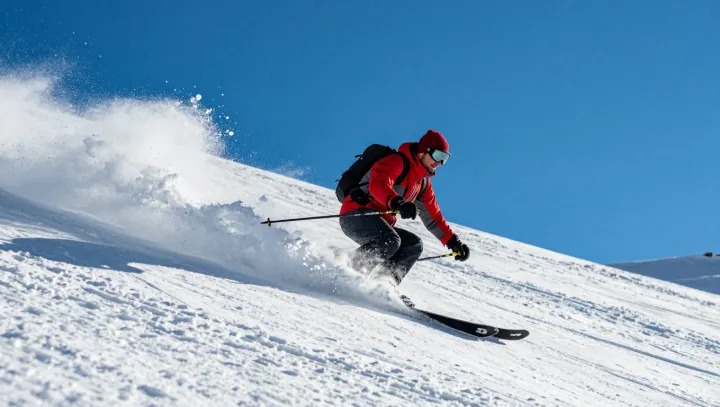
Leaning back in powder is a tempting mistake. The tips may rise, but the skier pays for that lift with tired legs and diminished control. Deep snow pushes against the skis along their length; moving too far aft makes it harder to guide them through that resistance and adjust when the surface changes.
Balance, not brute force, keeps a skier moving. The goal is to keep the center of mass roughly over the base of support, with ankles, knees and hips flexed enough to absorb changes in the snow. Lean back too far and the quadriceps must work harder to resist the torque around the knees. Pressure also shifts toward the ski tails, making the tips less effective at initiating a turn. Modern powder skis provide extra surface area and shape that help them rise through soft snow, reducing the need to force the tips upward.
Smooth turns beat desperate corrections. Keep the hands visible, look ahead and allow both skis to arc through the snow rather than twisting them abruptly. A modest, steady pace helps the skis generate lift, while a consistent rhythm gives the body time to respond as resistance changes. Start on gentle terrain and adjust to the snow rather than chasing speed. Outside controlled ski areas, check avalanche conditions and travel with appropriate training, equipment and partners. In the quiet spray behind a balanced skier, effort gives way to motion.