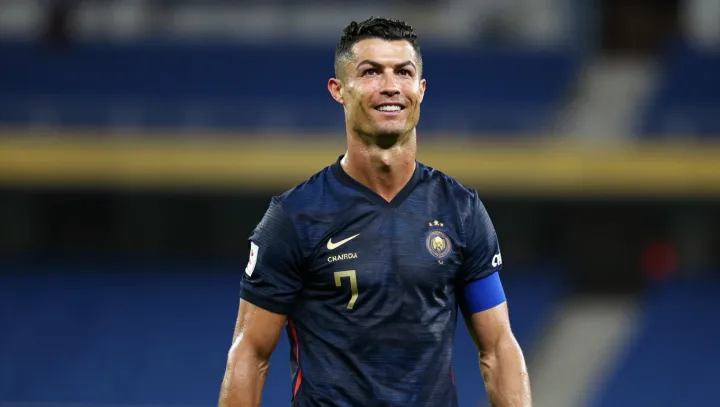
Ronaldo's 900th goal was less a monument to endurance than proof of a career repeatedly redesigned. Playing for Portugal against Croatia, the Al Nassr forward met Nuno Mendes's cross with a close-range volley. The finish was simple. Getting there, across two decades of reinvention, had been anything but.
The winger first had to become a scorer. At Manchester United, Ronaldo began as a touchline entertainer, using stepovers and acceleration to beat defenders before crossing or shooting. He gradually attacked the penalty area more often, arriving from wide positions as teammates supplied the ball. At Real Madrid, that movement became an industrial source of goals: cutting in from the left, he combined long-range strikes with runs behind the defensive line. His pace still mattered, but so did the timing of his runs and his growing appetite for the space between defenders.
The later transformation required a different kind of economy. As Ronaldo spent more time centrally, including at Juventus and Al Nassr, fewer sequences began with him carrying the ball past opponents; more ended with a first-time finish, a header or a penalty. His aerial ability and off-ball movement made the penalty area his main hunting ground, while teammates increasingly did the work of bringing the ball to him. The trade had costs. He could no longer offer quite the same threat in open space, but he could still punish a defender who lost sight of him for an instant. The touchline grew distant; the goal came closer.