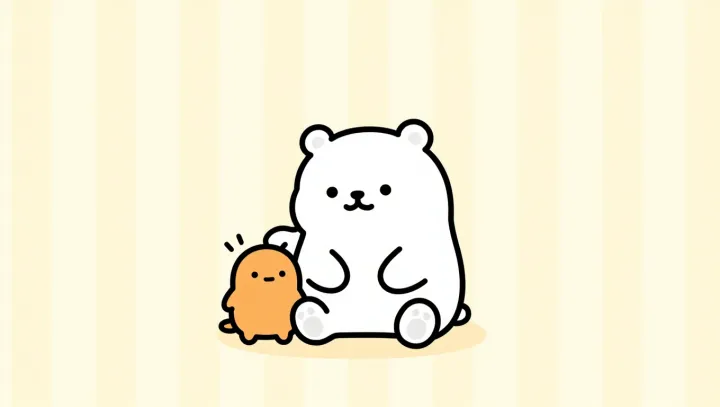
The white bear's gentle pat turns a formidable animal into a picture of reassurance. Against stripes, its small orange companion receives a gesture that asks for no explanation. The scene feels familiar. That familiarity rests on a remarkable cultural trick: a creature capable of immense force has been recast as a child's protector.
The teddy bear was made for affection, not accuracy. Its name is tied to an American hunting story in which President Theodore Roosevelt refused to shoot a captive bear; toymaker Morris Michtom later sold a stuffed bear associated with the episode. In Germany, Steiff also produced stuffed bears, helping establish the animal as a toy. Design softened the threat. Rounded bodies, short limbs and large heads echo features described by psychologists as the baby schema, a set of traits that can elicit caregiving responses.
Stories gave the softened bear something more valuable than a pleasant face: a temperament. Winnie the Pooh, created by A. A. Milne and inspired by his son's stuffed bear, is gentle, hungry and often muddled; his adventures make companionship more important than conquest. Plush itself matters too. A toy can be held, carried and pressed close when a child seeks reassurance, though no single object comforts every child. The real animal remains powerful and potentially dangerous. On the page, that power can be held in reserve, as a round paw comes to rest on a smaller friend.