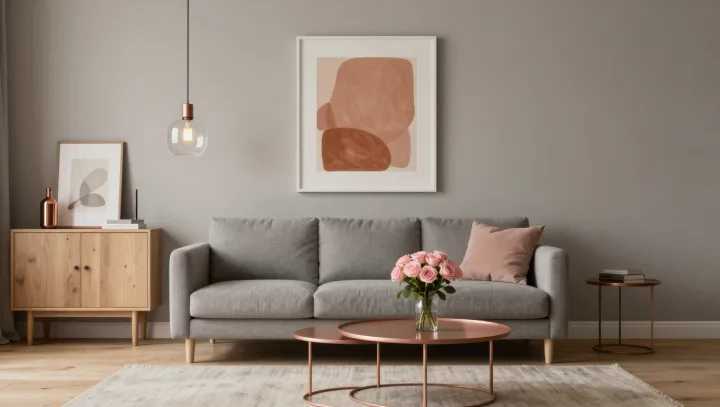
Gray is never quite neutral. A light gray sofa can look inviting under warm illumination and almost blue beneath cooler light, even when the furniture stays put. The shift is not a trick of decoration: it begins with the wavelengths reaching the fabric and ends with the eye's interpretation of them.
Light deserves the first inspection. Color temperature describes the apparent warmth or coolness of a light source, but its spectral power distribution reveals which wavelengths it actually emits; two lights with similar color temperatures can therefore render the same fabric differently. Daylight changes too. Its direction and the conditions outside alter the mix reaching the room, while nearby surfaces reflect some wavelengths more strongly than others. The pale wood cabinet can lend reflected warmth to adjacent areas, though the effect depends on its finish and position.
Context is an accomplice. Blush accents and copper-toned details make the sofa's gray appear different by providing warmer colors against which to judge it, while chromatic adaptation helps the visual system adjust to the prevailing illumination. That adjustment is imperfect. Anyone choosing a sofa or a lamp should examine fabric samples beside the cabinet under both daylight and the intended electric light, rather than trusting a single showroom view. A warm bulb may flatter the wood but alter the blush accents; a cooler one may sharpen the gray without making the room feel colder to every eye. The sofa remains still, while its color seems to negotiate with the light.