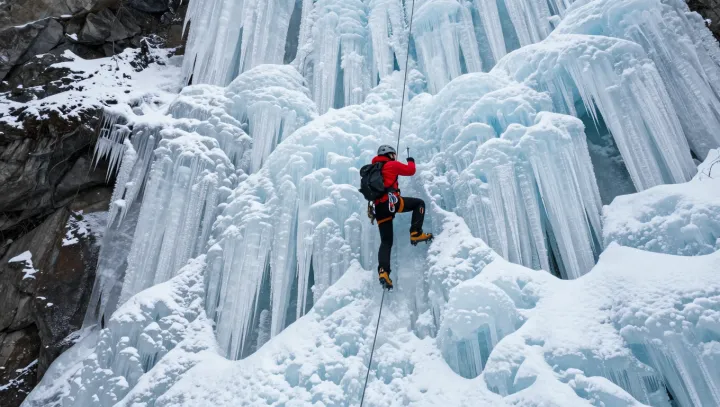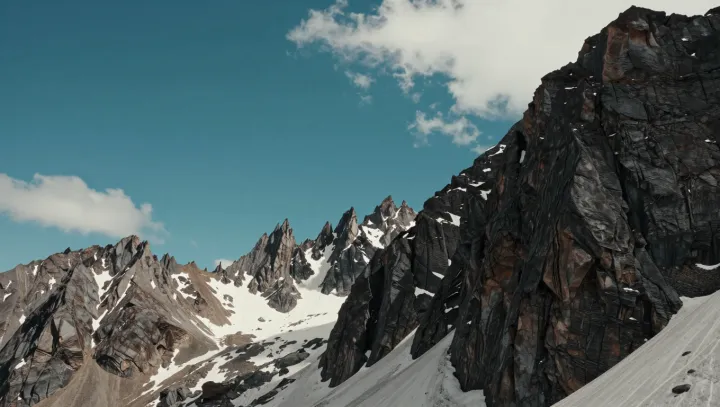
Ice does more than fill mountain valleys: it helps sharpen the rock above them. The summit is the remainder. As glaciers flow downhill, they erode their beds and the walls of high basins, gradually cutting back toward the ridges that separate neighboring valleys.
The strongest cuts begin where ice meets rock. In a process called plucking, meltwater enters fractures and freezes, allowing moving ice to pull loosened blocks away. Abrasion works differently. Rock fragments carried at the glacier's base scrape and grind the underlying surface, while freeze thaw weathering can loosen exposed rock above the ice. Together, these processes deepen and widen bowl-shaped hollows known as cirques. As a glacier erodes its basin, the wall at the basin's upper edge can retreat toward a divide.
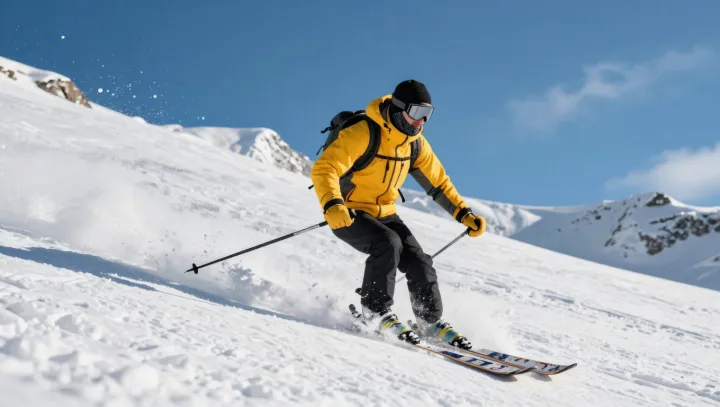
A peak owes its edge to losses on several sides. When cirques erode toward one another, the rock between them can narrow into a knife-edged ridge called an arete; where several cirques converge, they may leave a pointed summit known as a horn. Not every mountain has this history. Rock type, fractures, uplift and erosion by water also influence its shape, and glacial carving takes place over long stretches of time. Beneath the scattered clouds, the surviving stone marks the boundary between places where the ice has been.