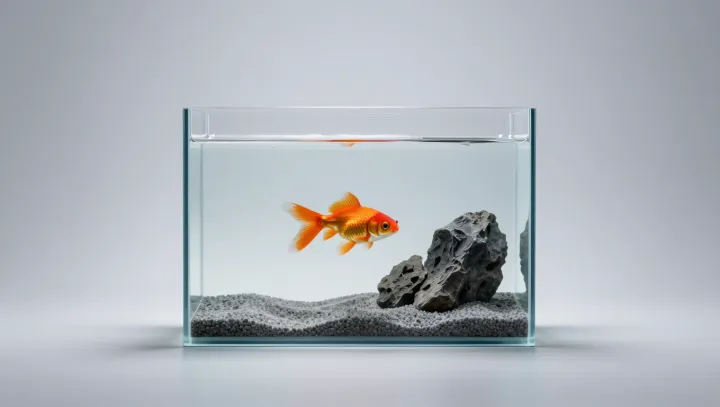
Glass, water and bubbles often sit in the quietest corner of a living room, yet the aquarium is running a private climate experiment. Evaporation from the tank raises absolute humidity, which in a small or poorly ventilated room shifts dew point and pushes surfaces toward condensation. That thin film of moisture on walls, window frames and cables is not decorative; it accelerates corrosion of metal contacts and increases the risk of stray currents across dust and salt deposits.
Behind the glow of the tank, pumps, heaters and lights draw continuous electrical load, often through extension cords placed near splashes and humid air. High relative humidity can lower the breakdown voltage of air and, combined with capillary condensation on sockets, raises the probability of insulation failure. At the same time, the light cycle of the tank, especially blue-rich LEDs left on late, interacts with melatonin secretion and circadian rhythm. Even low illuminance leaking into a bedroom can fragment sleep architecture, altering rapid eye movement balance and baseline autonomic tone, while the fish still appear perfectly normal in their controlled water column.
Microclimate gradients form around the tank: warmer, more humid air rises along the glass, fuels localized convection and can change indoor particulate behavior. Aerosolized droplets from vigorous aeration carry dissolved salts and organic compounds that deposit on nearby electronics, quietly adding to surface conductivity and long-term material fatigue. The body adapts through thermoregulation and respiratory rate shifts long before any human notices, and long before an aquarist reads fish behavior as a warning sign.