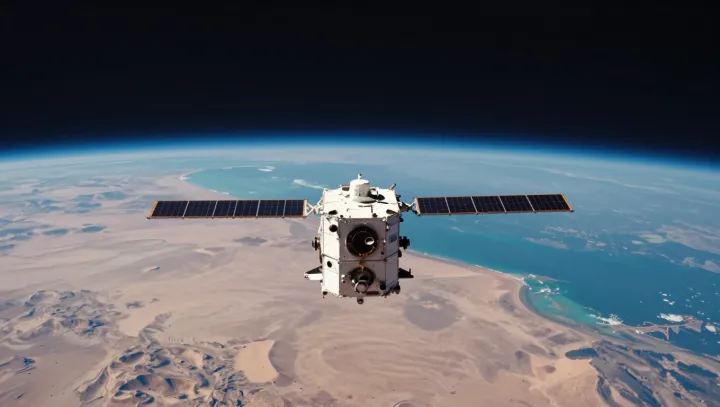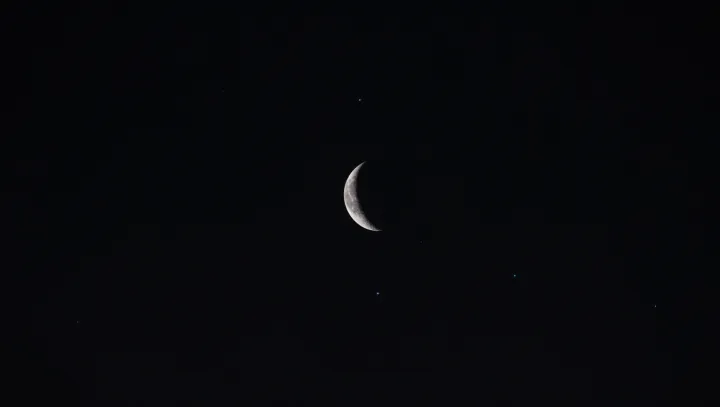
Earth’s day is slowly lengthening as the Moon siphons off rotational energy, adding roughly 1.7 milliseconds to each day per century. This change arises from tidal friction: as oceans bulge toward the Moon, gravitational drag converts rotational kinetic energy into heat and orbital motion.
In classical orbital mechanics, the system conserves total angular momentum, so the lost spin from Earth reappears as a gradual increase in the Moon’s orbital radius and orbital period. Geological records in tidal rhythmites and coral growth bands suggest that earlier in Earth’s history there were many more days packed into the same span of orbital time, matching predictions from celestial mechanics.
The process is not linear, because continental drift, ocean basin geometry and viscoelastic deformation of Earth’s mantle modulate tidal dissipation. Still, models of energy transfer and entropy production in the Earth–Moon system converge on the same direction of change: a slow, cumulative stretching of the day that continues as long as the tides keep working.