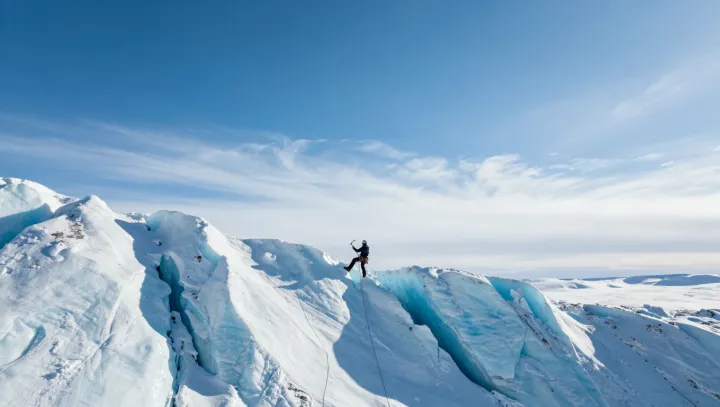
Blue-white walls, hollow thuds, and hairline fractures turn an ice route into something closer to a forensic file than an adventure poster. In modern ice climbing, mastery of risk assessment does not reward fearlessness; it rewards the climber who can decode almost invisible clues in ice, temperature, and terrain before a tool even leaves the ground.
Each swing of an axe interacts with fracture mechanics, not with bravery. Crystal structure, density gradients and trapped air pockets govern how stress distributes through a frozen pillar. Subtle changes in sound, from a dull thump to a high, brittle ring, reveal internal discontinuities and the likelihood of crack propagation. The climber reads these signals as evidence, building a real time hypothesis about load paths and failure modes rather than relying on intuition alone.
Temperature profiles and thermal gradient shape the ice like a slow experiment in physical chemistry. A minor rise can increase ductility near the surface while leaving deeper layers rigid, creating shear planes that behave like hidden fault lines. Terrain features then act as amplifiers or dampers of risk: gullies funnel falling debris, convex bulges concentrate tension, and runout zones determine the margin for error. The result is a vertical crime scene where every drip line, fracture and echo is a clue, and the decisive skill is not courage but disciplined observation.