Blinding white sand, flat blue sky and a hammering sun can flip, in a single step, into light that behaves like a studio softbox. The trick is not changing the sun, but changing where you stand in relation to its angle, the water and the sand.
Move so the sun sits just off to the side or slightly behind your subject, not directly overhead in front of you. This shifts the specular highlight off faces and pushes the hardest shadows away from the camera. Now let the ocean and sand act as a massive reflector: their albedo throws scattered light back into eye sockets and under chins, compressing contrast in a way that flatters skin and keeps the sensor’s dynamic range under control.
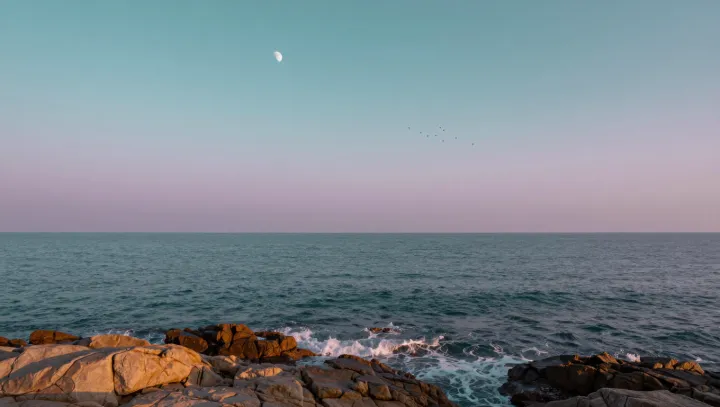
Add a small rotation of your body until the sun’s glare skips off the water at a shallow angle instead of firing straight into the lens. Surface ripples break the beam into countless micro reflections, a natural diffusion pattern that mimics a softbox baffle. Shoot with your subject framed against the brighter ocean rather than the darker dunes, and that tiny geometric adjustment turns harsh noon into a cinematic gradient of midtones, rim light and gentle specular detail.