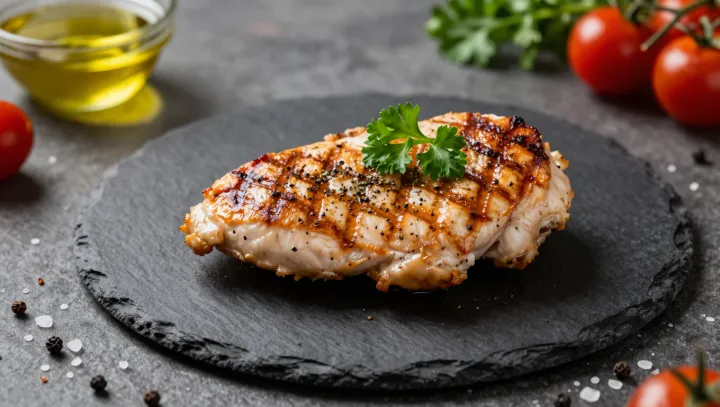
Plain chicken breast can outperform richer cuts when salt quietly rewires its structure. Once sprinkled or brined, sodium ions move into the meat, slipping between tightly packed muscle fibers and changing how the proteins inside them behave.
The key players are myofibrillar proteins such as myosin and actin. Salt causes partial protein denaturation, loosening these filaments and weakening their original cross links. As this network relaxes, the muscle matrix gains extra capacity for water binding and forms a more elastic gel when heated. That modified structure traps free water instead of letting it leak out as drip loss, so the cooked meat retains higher moisture despite its low intramuscular fat.
Ionic strength also alters osmotic pressure across the muscle cells, encouraging water to migrate inward during brining and stay associated with charged protein sites during cooking. When heat sets this salt modified lattice, flavor molecules from the seasoning distribute more evenly through the tissue and remain in the hydrated protein network. A cut often dismissed as dry becomes a case study in how protein denaturation and water holding capacity can matter more than fat content for tenderness and taste.