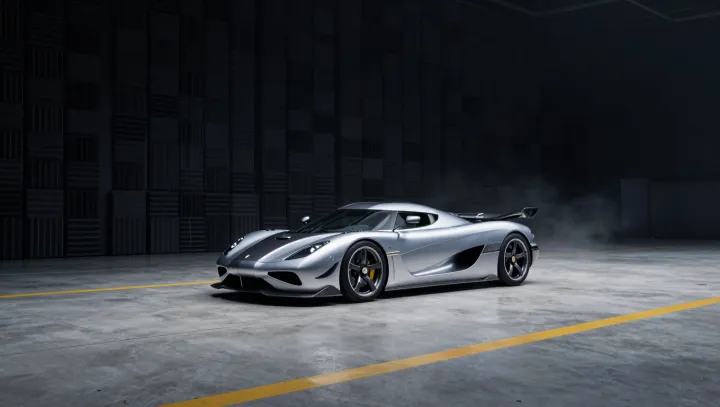
The same forces that make a family sedan dull on paper also shape many of the most expensive supercars on the road. Beneath carbon fiber skins and dramatic doors, the hardware often follows the same template: a combustion engine with pistons moving in cylinders, a unibody structure that crumples in a crash, and airbags triggered by impact sensors.
This convergence starts with physics and thermodynamics. An internal combustion engine still obeys the Otto cycle, and gains in thermal efficiency are incremental, not magical. Whether a car costs five figures or seven, engineers chase the same goals in volumetric efficiency, emissions control and fuel atomization. That is why a compact hatchback and a flagship supercar can both use turbocharging, direct injection and similar displacement-to-power ratios, even if one revs higher or uses exotic materials.
Safety further narrows the design space. Global crashworthiness standards and frontal impact regulations demand predictable deformation, controlled deceleration and defined crumple zones. To pass these tests, both cheap sedans and halo models rely on comparable load paths, side-impact beams and restraint systems. Electronic stability control and anti-lock braking, once rare, have become near universal because they address the same limits of tire friction and human reaction time.
Economics then locks in the resemblance. Automakers spread research and development costs across shared vehicle platforms, reusing engine blocks, control units and chassis hard points to exploit economies of scale. Even when a supercar receives unique tuning, its basic architecture may descend from a mass-market engine family designed for reliability, manufacturability and emissions compliance. What buyers pay for at the top end is less a different species of machine than an extreme, polished expression of the same underlying constraints.