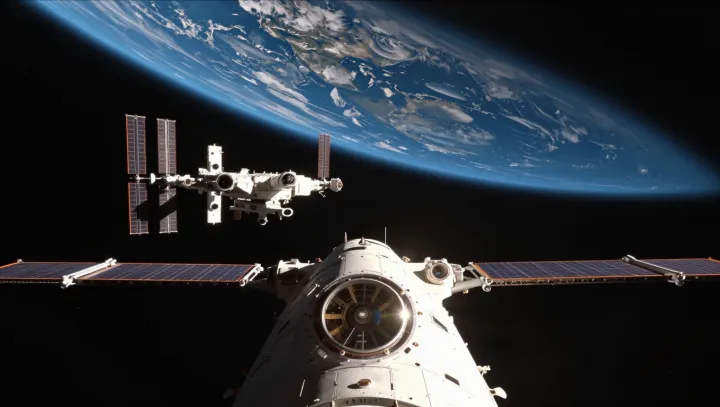
A paint chip, not a solar flare, now tops the list of things that can end an astronaut’s life fastest. In low Earth orbit, even a fragment a few millimeters wide can move at several kilometers per second, turning basic orbital mechanics and kinetic energy into a point‑blank ballistic threat.
Radiation looks dramatic on paper, yet its danger is slow, probabilistic, and spread across long exposure. Space agencies manage it with shielding, mission duration limits, and dosimetry, leaning on models of stochastic effects like carcinogenesis and deterministic thresholds for tissue damage. A paint chip ignores all that careful calculus. Hit a visor or life‑support line, and you get instant depressurization or catastrophic suit breach.
The harsh truth is that collision physics is easier to weaponize than radiation biology is to predict. Hypervelocity impact testing shows that millimeter‑scale debris can punch through aluminum and multi‑layer insulation, because momentum and impact pressure scale brutally with velocity in the vacuum of orbit. Radiation mitigation lives in the language of dose limits and shielding thickness. Debris mitigation, by contrast, lives in frantic avoidance maneuvers, Whipple shields, and the hope that the smallest fragment misses by centimeters.