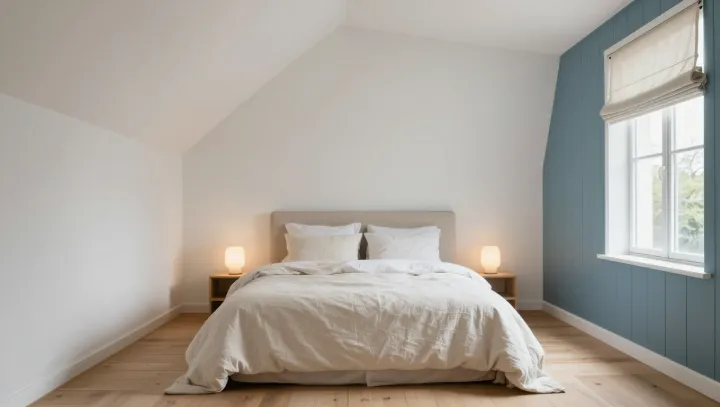
A 10 m² room can outperform a 20 m² box if space is treated as psychology, not geometry. The eye, not the floor plan, decides what feels generous, because visual perception edits out anything it cannot see in one calm sweep.
Sightlines matter most. Keep the longest wall uninterrupted, and the room reads as longer than it is, while a low platform bed and wall-mounted lamps pull furniture mass off the floor plane so the brain infers extra volume from continuous visible baseboard and skirting lines.
Storage depth is the next quiet trick. Shallow, full-height cabinets with flush fronts reduce parallax cues, so binocular vision struggles to judge true distance and overestimates size, whereas deep, chunky dressers create heavy foreground blocks that shrink apparent depth even inside a much larger shell.
Light reflection then finishes the illusion. High light reflectance value paints, satin finishes and a single dominant indirect source bounce photons across surfaces, flattening luminance gradients that usually signal corners, while a mirror placed in the terminal sightline doubles perceived axial length without adding any real square meter.