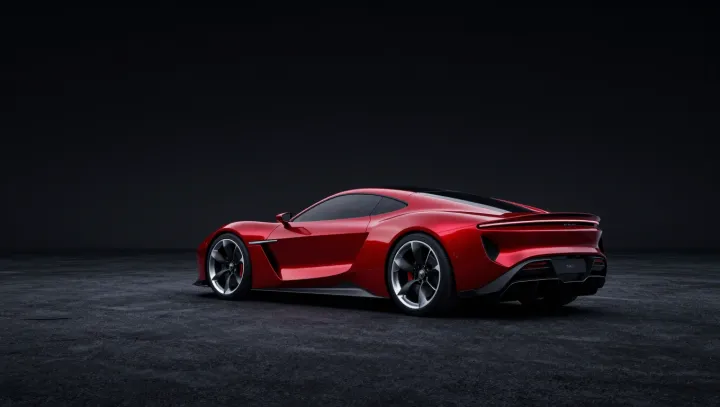
A four‑seat electric sports car does not cheat physics; it weaponizes it. The headline number, about 1.9 seconds from 0–60 mph, sits inside what tire grip and air resistance quietly allow on dry asphalt.
The real shock is that the advantage is brutally simple. Electric motors deliver peak torque at zero revolutions per minute, so the car starts with maximum thrust instead of waiting for an engine to climb through a power band, a gearbox to kick down, and a turbocharger to spool. High current through a permanent magnet or induction motor generates magnetic fields that rise in milliseconds, turning electrical power directly into crankless, shift‑free torque at the wheels.
Grip, not power, becomes the primary gatekeeper. With a low battery pack acting as a slab of ballast, weight distribution and center of gravity favor the tires, pushing the friction coefficient toward its limit without wheelspin. Electronic stability control and traction control run high‑frequency feedback loops, sampling wheel speed sensors and accelerometers, then modulating inverter output so each axle, and even each wheel in a torque vectoring setup, receives exactly as much torque as the contact patch can transmit before sliding.
Legal road status adds constraint but also discipline. Ride height, crash structures, and tire choices must meet regulation, so engineers chase acceleration by trimming drivetrain losses, optimizing power electronics efficiency, and sharpening launch control algorithms instead of resorting to slick racing compounds or stripped interiors. What looks like a party trick at a stoplight is really the logical outcome of combining instant electric torque, high traction, and tightly managed power delivery until the driver, not the hardware, becomes the limiting factor.