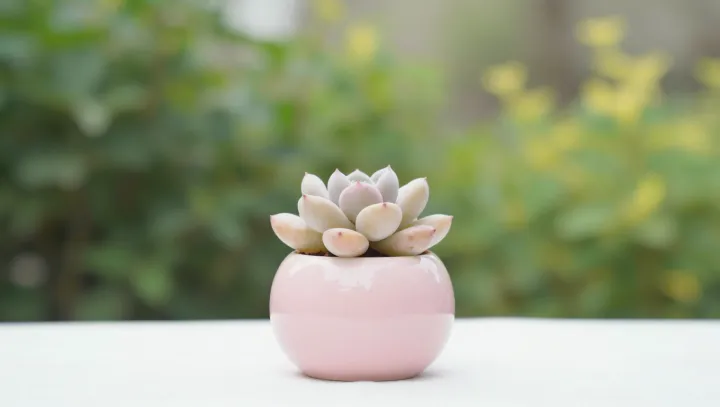
At the bottom of a succulent pot, survival is decided before the plant even settles in. Shiny glazes and pastel tones distract, while the key variable is how fast water escapes through that drain hole and the material around it. Porous clay or concrete turns the whole wall into a slow vent, pulling moisture out by capillary action and evaporation, so the root zone rarely stays saturated long enough for anaerobic microbes to gain an advantage.
Style-first choices often lock plants into what is, in effect, a sealed tank. Nonporous resin or heavily glazed ceramic relies on a single outlet, so hydraulic conductivity is limited to that small opening, and any slight clog creates a perched water table just above it. In that stagnant layer, oxygen diffusion collapses, fine feeder roots suffocate, and opportunistic fungi exploit weakened tissue long before leaf shrivel gives owners a warning.
Fast drainage and breathable walls, by contrast, create a dynamic equilibrium. Water infiltrates, then gravity and vapor pressure gradients clear the pores, restoring aeration between irrigations. A pot that looks plain but sheds a full watering in moments, and then dries its sides to the touch soon after, quietly does what colorful containers often fail to do: keep succulents alive without drama.