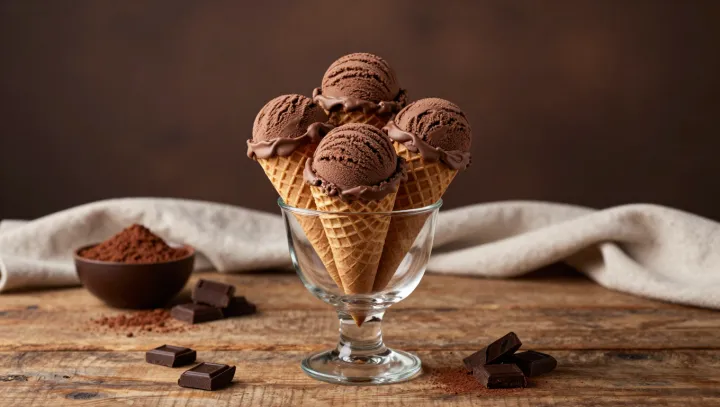
Softness, not flavor, is the real obsession in professional chocolate ice cream. Texture decides whether a pint feels luxurious or like chipped masonry, and chefs attack that problem with chemistry, not just cocoa percentages or cream ratios.
At the center of their strategy sits water. Left alone in a domestic freezer, water in the mix forms large ice crystals and locks into a rigid lattice, because household units run colder and cycle less evenly than commercial freezers. To break that lattice, chefs add tiny amounts of alcohol or corn syrup, both acting as what food scientists call freezing point depressants and as inhibitors of ice crystal growth. They do not want intoxication or sticky sweetness; they want molecular disruption.
Alcohol molecules slip between water molecules, lower the freezing point of the unfrozen phase, and keep a portion of the mix in a viscous, liquid state. Corn syrup, rich in glucose and other small saccharides, raises total dissolved solids and increases osmotic pressure, which also restricts crystal size and slows recrystallization. The result is a pseudo-gel matrix, supported by milk fat globules and emulsifiers, that bends under a spoon instead of shattering. A splash in the churn, and a rock-hard tub becomes a dessert that behaves as if it came from a pastry kitchen, not from the back corner of a freezer drawer.