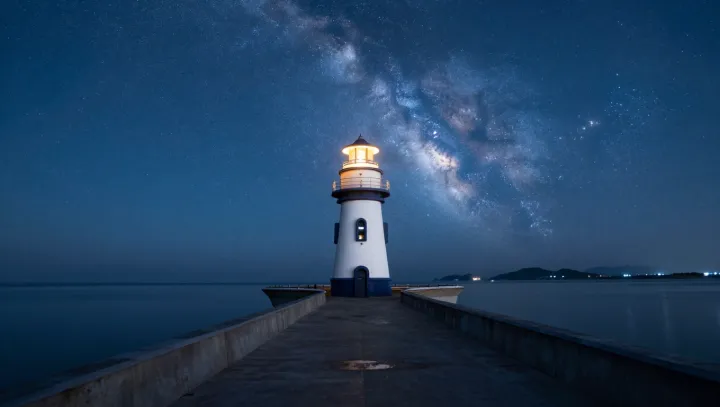
The real shock is that the hardware is not magical at all. A phone sensor barely larger than a fingernail just leans on physics and statistics. Long exposure stretches each frame for several seconds, so individual photons from distant stars keep hitting the same photodiodes while the electronic shutter stays open. With the lens focused near infinity and optical distortion corrected in software, point sources stay pin sharp instead of smearing into mush.
The desert helps more than any glossy spec sheet. Dry, thin air cuts atmospheric scattering, so the sensor sees higher contrast than your dark‑adapted retina. Strict manual exposure locks ISO low to contain shot noise and thermal noise, then trades brightness for time: a stable tripod, electronic image stabilization and multi‑frame stacking align repeated exposures, while demosaicing and temporal noise reduction average random variation away.
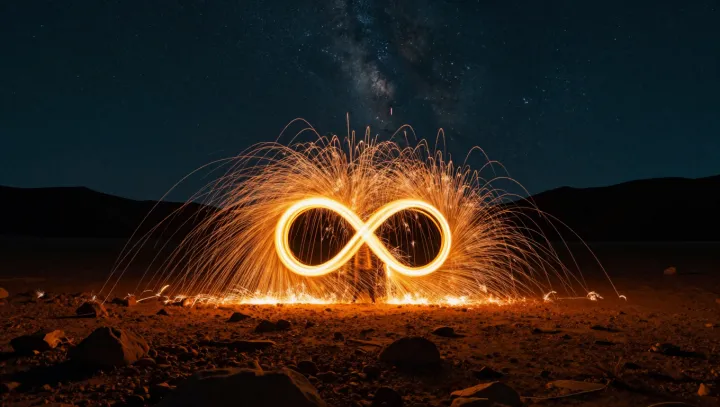
The cheap flashlight is not a gimmick but a brush. During the same long exposure that records star fields, brief sweeps of light paint foreground rocks or a parked car, exploiting reciprocity so static objects integrate without blowing out highlights. Automatic white balance and local tone mapping then compress this extreme dynamic range, producing skies dense with stars and smooth, continuous light trails that the naked eye never quite assembles at once.