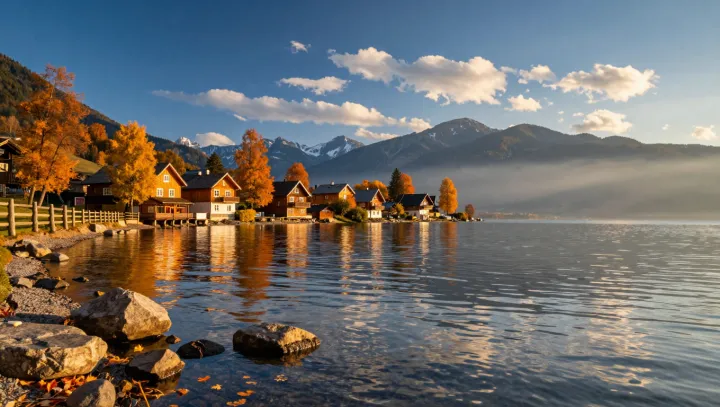
A quiet shoreline can outperform the corner office in the brain’s accounting of happiness. Not because leisure is noble, but because the lake and the mountain feed very different neural circuits from the ones that chase promotions and bonuses on repeat.
Career success leans on dopamine bursts tied to variable reward and social status, a loop that habituates fast as mesolimbic pathways adapt and demand ever higher stakes. Each raise feels sharp, then flattens. The prefrontal cortex stays on guard, managing email, hierarchy, and risk, while cortisol and sympathetic arousal keep the body in a low, grinding alert. That system pays monthly, but its pleasure is thin, brief, and quickly normalized by hedonic adaptation.
A week by a mountain lake, by contrast, recruits slower, deeper machinery. Parasympathetic activation drops heart rate and cortisol, while the hippocampus and default mode network have time to consolidate rich episodic memory and self-related imagery. Sensory detail — cold water, pine resin, changing light — anchors experience into long-term potentiation, giving it a stable trace in neural plasticity rather than a passing spike. The trip ends on the calendar, yet it remains cognitively accessible, easy to replay, emotionally saturated each time it is recalled. Promotions fade into a blur of similar meetings; the lake stays singular, vivid, and therefore disproportionately powerful in the story the brain tells itself about a happy life.