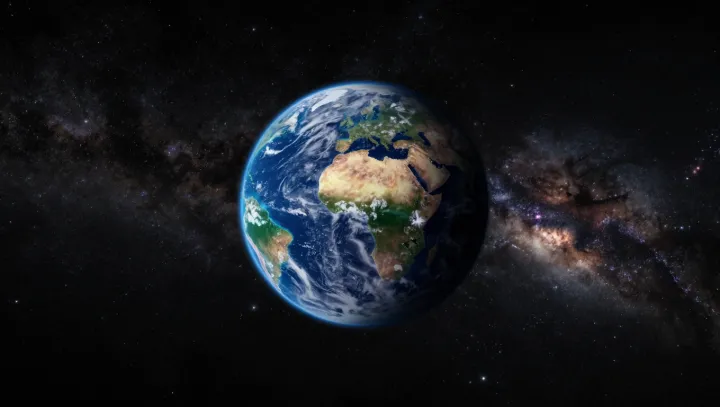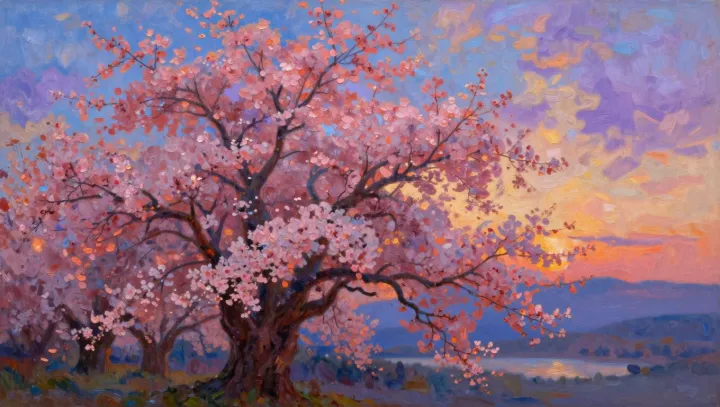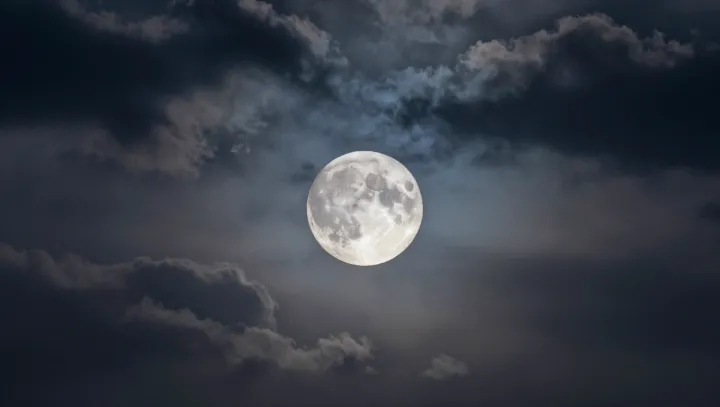
The red Sun at dusk and the chalk‑white Moon overhead are not opposites at all. They are the same equation, stretched to two extremes of geometry and wavelength filtering inside Earth’s atmosphere.
What looks like drama is just Rayleigh scattering doing a simple, brutal job. When the Sun sinks low, its light slants through a long air column, so shorter wavelengths are scattered out of the direct line of sight, leaving a spectrum dominated by longer red and orange bands. That angular path length amplifies the wavelength‑to‑the‑fourth power dependence, turning the solar disk into a dim ember while aerosols add extra extinction for blue and green photons.
By contrast, the high Moon refuses to blush. Its reflected sunlight enters almost straight down, crossing a far shorter optical path, so only a tiny fraction of visible wavelengths is removed from the beam before it reaches your retina. The scattering cross‑section still favors blue loss, yet the effect is so weak in this configuration that the spectral power distribution arriving at the eye stays nearly flat across the visible range, which the visual cortex reports as cold, neutral white.
So the same radiative transfer physics that paints sunsets red is, under a steeper angle and thinner slice of air, stripped of its filtering power, leaving the high Moon looking less like a lantern and more like raw, unedited sunlight bounced off rock.