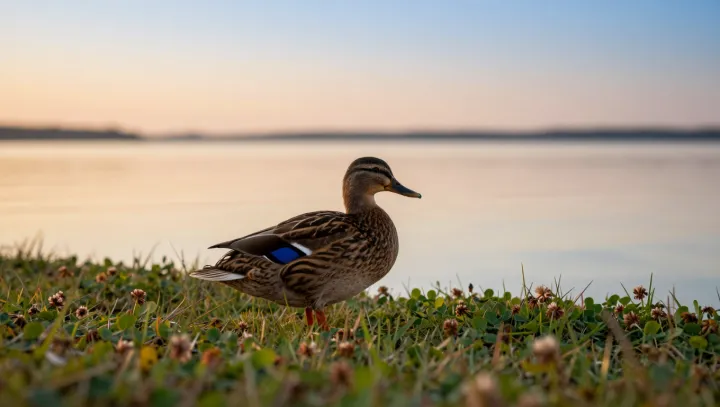
That quiet duck is not mild at all; it is history with a heartbeat. Beneath the feathers sits a theropod blueprint, the same basic body plan that once drove lean, ground‑running hunters across floodplains. Fossil hips, three‑toed tracks and wishbones match the bird skeleton so tightly that many paleontologists now talk about birds as dinosaurs, not their replacements.
The strange part is that water came late. Early avian dinosaurs sprinted, vaulted into the air and used feathered forelimbs as control surfaces long before any descendant paddled. Over time, natural selection retooled that running frame: hollow bones stayed, but the tail shrank, the sternum grew a deep keel for flight muscles, and the forelimbs fused into wings that could still fold safely beside a splash‑prone body.
Waterfowl push the idea further. Webbed feet and a broad, flattened bill are not soft decorations; they are hydrodynamic hardware welded onto an ancient chassis. The counter‑shaded plumage, the oil‑coated feathers that exploit surface tension, and the modified vertebrae that stabilize the neck show how a land predator’s descendant became an amphibious generalist, quietly outlasting icons like Tyrannosaurus while circling a city park lake.