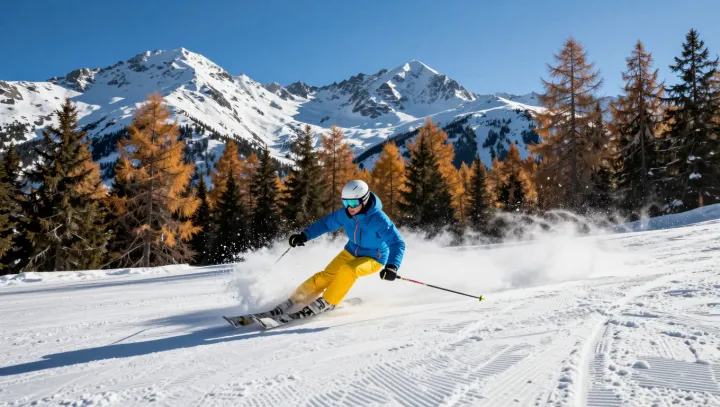
A ski run acts like a physiological prank on the body. Legs burn, lungs work, monitors show heart rates comparable to moderate running, yet brain scans in research settings often reveal patterns that resemble quiet, centered attention rather than raw panic.
The odd pairing starts in the muscles, not in mysticism. Steep terrain demands repeated eccentric contraction in the quadriceps and gluteal muscles, plus isometric work to hold posture, which drives oxygen consumption and cardiac output much like interval training. Cold air adds peripheral vasoconstriction, pushing the cardiovascular system harder even when the skier reports only moderate exertion.
The mind, though, goes the opposite way. Instead of scattered alertness, the task load of balance, edge control, and speed estimation appears to narrow sensory processing. Electroencephalography studies show increased alpha and theta power, while functional connectivity shifts in networks linked to the prefrontal cortex and anterior cingulate cortex echo states measured during focused-attention meditation. Threat plus skill compress awareness into a single moving target: the next turn.
That is the paradoxical payoff. High sympathetic arousal keeps the body on standby, yet the brain trims internal chatter, suppresses default mode network activity, and stabilizes motor planning circuits. Skiing becomes a rare training ground where stress hormones, proprioceptive feedback, and practiced technique conspire to make effort feel, briefly, like calm.