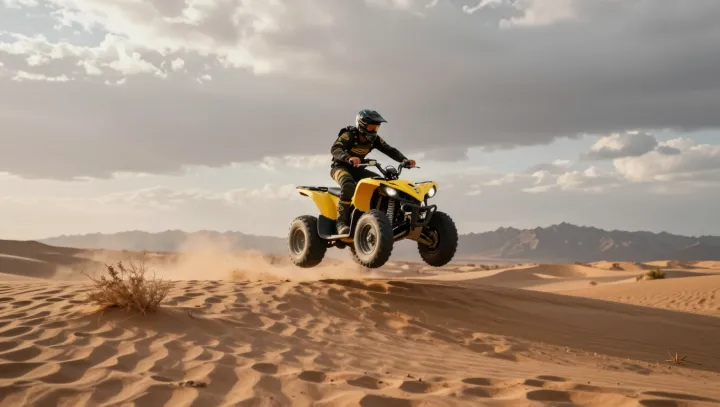
A floating ATV is not drifting; it is solving an equation in real time. Once the tires leave the dune, linear momentum is basically locked, yet the machine still twists because the rider is quietly trading forces inside the system, turning a bad launch angle into a calculated rotation about the center of mass.
The harsh truth is that mid‑air saves start at the rear axle. When a rider blips the throttle in flight, the engine and wheels accelerate, and by conservation of angular momentum the chassis pitches the opposite way around the center of mass. Short jab. Nose comes up. Longer drive, with higher wheel angular velocity, and the nose tucks. No outside push is needed; internal torques between rotating components and the frame do the work, just as a reaction wheel steers a satellite in attitude control.
Equally underrated is how much the rider’s torso becomes moving ballast. A sudden hip shift rearward pulls the combined center of mass back, forcing the front end to lift while the rear suspension unloads in the air, and a diagonal lean introduces a yaw component that can realign the quad with a rutted landing ramp. These body‑induced torques, coupled with throttle‑driven pitch control, give skilled riders a limited but decisive authority over roll, pitch and yaw, enough to turn a sketchy desert crest into a landing that looks intentional rather than lucky.