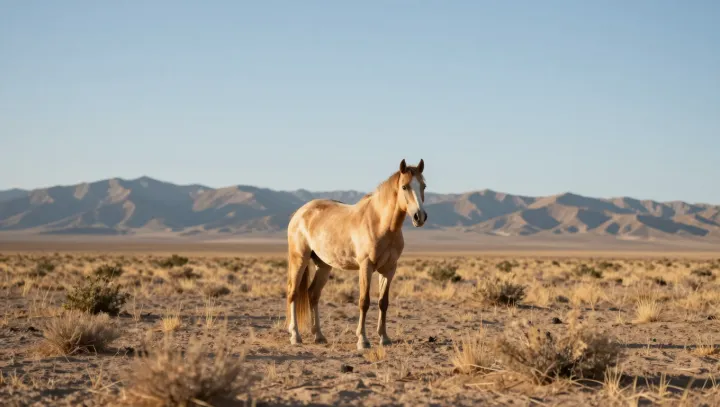
The horse turns out to be a taxonomic fiction. Fresh genomic datasets, drawn from modern and ancient samples, now show that the animal grouped under Equus ferus caballus actually contains several deep lineages whose genetic distance rivals that between polar bears and brown bears.
This finding upends the lazy idea of a single, homogeneous horse and instead exposes a set of long‑separated clades, split by substantial mitochondrial DNA divergence and clear structure in nuclear single‑nucleotide polymorphisms. Geneticists report that some domestic and so‑called wild populations share less recent common ancestry with each other than with extinct equids once written off as side branches, a pattern that strains the biological species concept and stresses how much morphology can lie.
Conservation policy, not taxonomy textbooks, is now the weak link. Treating all horses as one management unit has encouraged cross‑breeding that erodes evolutionarily significant units and blurs adaptive local genotypes tuned by natural selection to harsh steppe, arid plateau, or cold coastal environments. Funding agencies and wildlife authorities will have to decide whether to ring‑fence these cryptic lineages as distinct conservation targets or keep ignoring genomic structure because the animals still look, to an untrained eye, like the same old horse standing in a field.