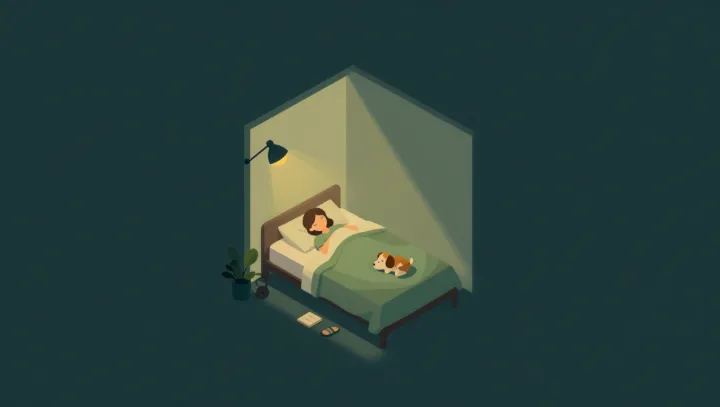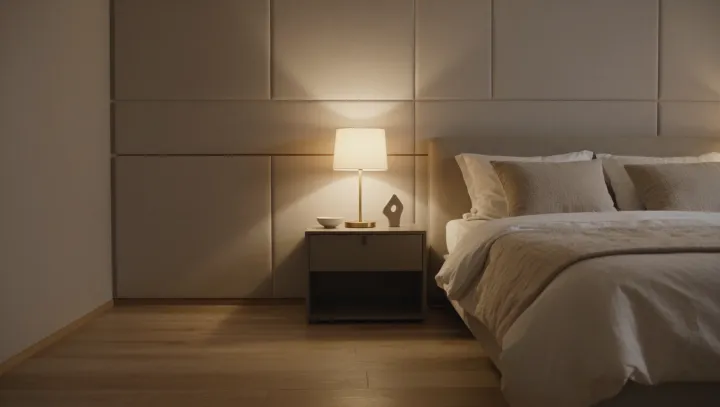
An almost empty bedroom can feel oddly protective when the lighting shifts first. Soft, warm-toned light lowers perceived threat because the visual cortex receives less high-contrast data, while the amygdala, the brain’s alarm hub, fires less aggressively under reduced blue wavelengths. Short shadows. Fewer edges. The space looks simple, so the brain spends less energy on visual scanning and more on downshifting toward sleep.
More important than decor is what your skin and ears tell your brain. Padded wall panels increase sound absorption and slightly dampen high-frequency reverberation, which reduces micro-arousals tied to the autonomic nervous system. At the same time, the panels add a clear boundary line; somatosensory mapping loves that firm, padded edge behind the bed, translating it as a barrier rather than exposure to open space.
The real surprise is how ruthless editing of the bedside zone can change emotional temperature. When only one or two objects sit within arm’s reach, working memory and attentional load both drop, shrinking what cognitive scientists call “stimulus set size.” Fewer cables, books, and bottles mean fewer potential triggers, so even a sparse room stops feeling like a void and starts reading, to the brain, as controlled territory.