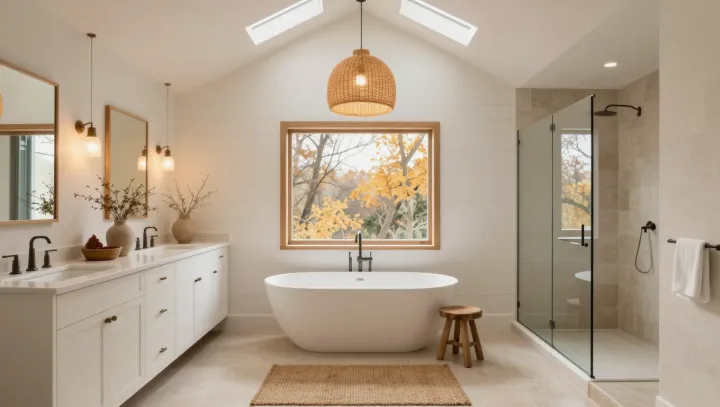
Soft light, not square footage, decides whether a bathroom can calm the mind before bed. Under twin skylights, daylight enters as a diffuse wash that mimics the broad spectrum of open sky, then fades into darkness without the harsh spike of blue often produced by overhead LEDs. This gradual shift supports melatonin secretion, giving the space an almost physiological permission slip to slow down long before anyone reaches the pillow.
More radical than it looks is the choice to keep the room visually quiet. Clean lines, a freestanding tub set away from the wall, and a clear glass shower reduce visual noise, which environmental psychology links to lower cortisol levels and steadier heart rate variability. Warm pendant lighting, hung low and dimmed, creates localized pools of luminance rather than a uniform glare, echoing the contrast ratios used in hospitality spa design to signal safety, privacy and retreat.
What truly shifts the bathroom from functional to restorative is sequence. First the eye lifts to the skylights, then drops to the sculptural tub, then lands on the transparent shower envelope, a choreography that encourages slower movement and deeper breathing. In that measured progression from bright overhead glow to intimate side light, the room rehearses the same descent the body must make from alertness to sleep.