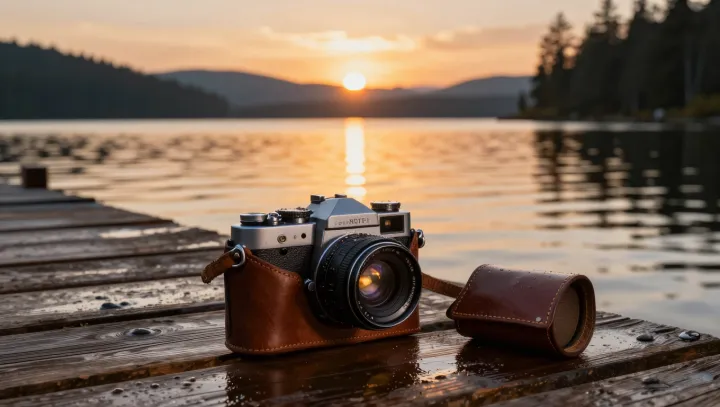
A mid-range smartphone now humiliates many legacy film bodies on sharpness charts, yet the price of those cameras often slides while the joy of using them climbs. That contradiction says less about optics and more about human reward circuits tied to effort, scarcity and perceived authorship of an image.
The market discount is blunt. Sensor dynamic range, autofocus algorithms and computational denoising outclass old metering systems, so buyers anchor value to resolution, noise floor and convenience. As repair costs rise and replacement parts vanish, depreciation accelerates. The camera becomes a liability on a spreadsheet even as it becomes an invitation in a photographer’s hand.
Psychologically, though, friction pays. Each mechanical shutter press is a commitment, reinforced by film grain, silver halide chemistry and the cost of every exposure. That sunk cost bias, paired with intermittent reinforcement when a frame succeeds, trains attachment far more effectively than an unlimited digital burst. Fewer frames mean each contact sheet feels like a deliberate chapter, not a scrollable feed.
There is also a status inversion at work. Once a professional tool, the film body shifts into a scarcity object, a kind of analog limited edition. Smartphones flatten images into homogeneity through automatic white balance and aggressive tone mapping, while film’s imperfections signal authorship and risk. Monetary value leaks away as a consumer good, yet accumulates as a psychological asset: proof that the photographer, not the algorithm, took the shot.