Violent surf, not gentle bays, is often the real architect of the calmest water on Earth. A cliffed coast that looks shredded by impact is usually one where wave energy has been sorted, redirected and spent with mathematical precision before it ever reaches the inner coves.
At the heart of this paradox sits wave refraction, the tendency of wave crests to bend as they slow over shallow seabeds. Headlands force the outer parts of a swell to decelerate and pivot, concentrating energy on the rock noses while starving adjacent embayments, so that one sector roars as another falls almost silent a short distance away.
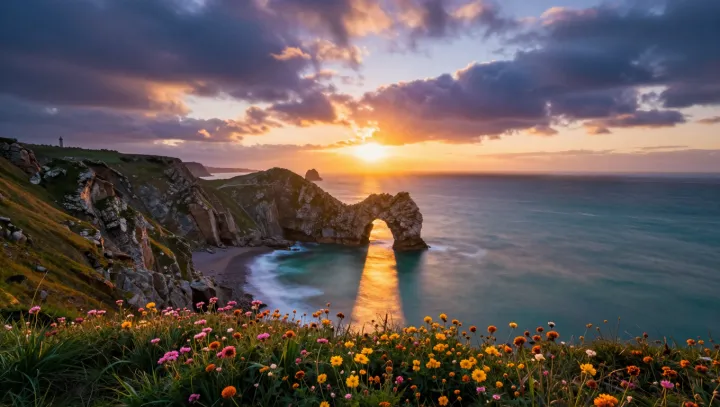
No less important are diffraction and energy dissipation around sea arches and offshore stacks. As waves thread through an arch opening or split around a stack, their crests interfere, cancel and lose coherence; turbulent breaking, viscous friction and bottom drag convert organized swell into heat and micro-eddies, leaving, in the geometric shadow of that rock, water that can sit glass-smooth even while the open coast detonates just beyond.