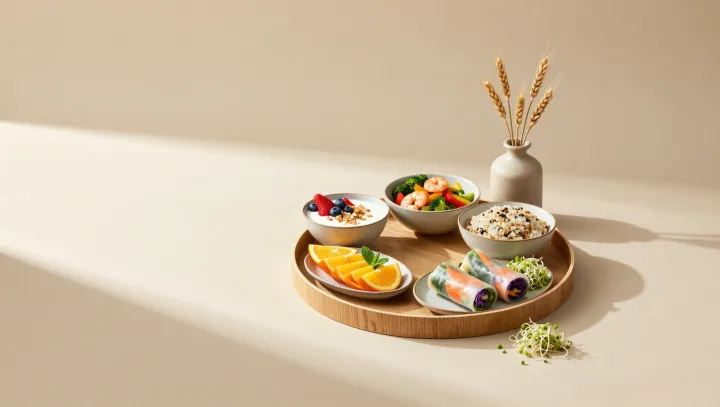
A ring of tiny bowls on a plate does something a single mixed dish almost never manages: it keeps your brain curious. Yogurt in one cup, berries in another, sliced vegetables, shrimp, rice, each in its own orbit, create a layout that exploits how appetite is wired long before you notice any intention.
The core trick is that your brain bores quickly. That boredom has a name, sensory-specific satiety, and it shuts down desire for one repeated taste while leaving appetite for new flavors intact, so one big stir-fry pushes you into flavor fatigue fast, whereas separate bowls reset interest with each small shift in taste, texture, and temperature, stretching satisfaction across more nutrient-dense items.
Equally underrated is how this plate acts as stealth choice architecture. By pre-allocating real estate to yogurt, fruit, and vegetables, the layout fixes a default allocation of macronutrients and fiber before hunger can argue, while visual portion cues from distinct containers help energy-density estimation in the visual cortex and prefrontal cortex, so you feel you are feasting, yet each unit is modest.
The surprise is that effort drops, not rises. Decision fatigue shrinks when the decision is no longer what to eat but in which order to empty the bowls, and the repeated micro-closure of finishing each container triggers reward circuitry more often than plowing through one large heap, turning a simple plate layout into a quiet, repeatable nutrient hack.