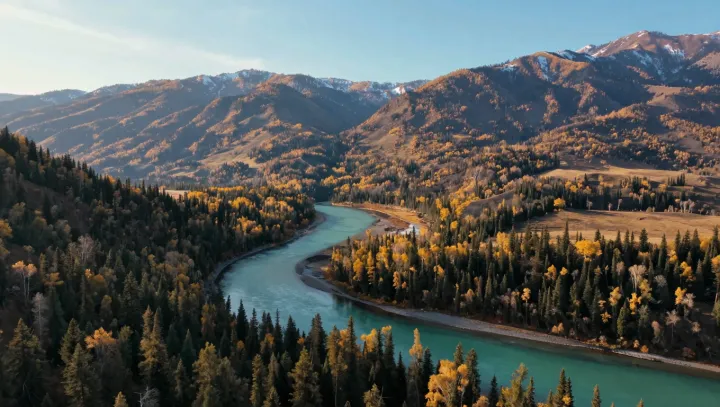
From the air, those turquoise threads look fragile; on the ground, they are ruthless engineers of erosion. A braided river slices itself into many shallow channels, each narrow branch forcing water into tighter cross‑sections where hydraulic shear stress spikes and grains begin to move. Instead of one deep corridor with slack margins, dozens of jets scour gravel bars, undercut permafrost bluffs and keep sediment in motion over long distances.
Counter to intuition, disorder wins. In a single wide channel, flow often stratifies, with slow eddies and dead zones where sand settles and stays. In a braided system, constant bar migration and channel avulsion repeatedly reset those traps, re‑exposing stored sediment to fast water. Turbulent bursts, bedload transport and suspended load all scale up as the network reconfigures itself through each thaw pulse, pushing silt and cobbles downvalley while the tundra waits to lock everything back in ice.
The quiet trick is time compression. Short, fierce melt seasons compress discharge into intense peaks, and the maze geometry turns that surge into mechanical advantage. Each branch may be shallow, but together they maximize wetted perimeter, increase friction, and convert potential energy into focused work on the channel bed, carving new braids into these valleys before the next freeze seals their latest design.