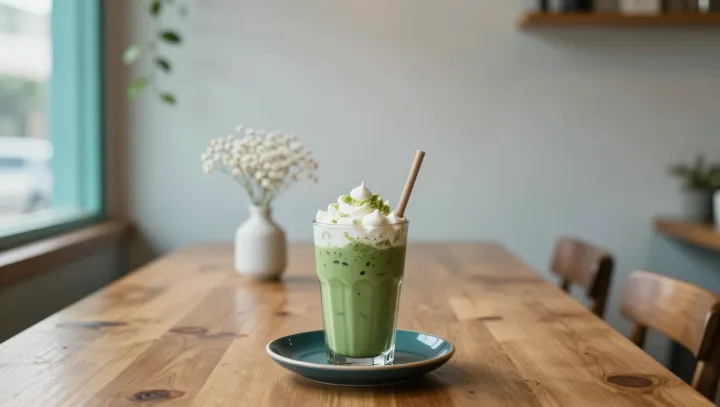
A towering iced matcha latte, buried under whipped cream and candy, looks like skincare heresy. The core chemistry says otherwise. At the center sits powdered green tea leaves, dense with catechins such as epigallocatechin gallate, or EGCG, a polyphenol studied for its ability to neutralize reactive oxygen species that damage lipids, proteins and DNA in cells.
The uncomfortable truth for skincare brands is this: that sugar‑heavy drink is still delivering many of the same molecular actors their anti‑aging serums advertise. EGCG does not vanish when milk, syrup and cookies enter the cup; it remains water‑soluble, absorbed through the gut, then circulates systemically, where it can influence redox signaling, support endogenous glutathione systems and indirectly protect collagen networks in the dermis that serums try to reach only from the surface.
Of course, the latte is not a nutritional saint. Added sugar can drive glycation, a process that stiffens collagen and works against any beauty claim printed on a bottle or posted on a café menu. Yet the metabolic downside does not erase the antioxidant payload; it simply forces a trade‑off between pleasure and biochemical efficiency, with the whipped cream sitting like a visible reminder of that quiet cellular bargain.