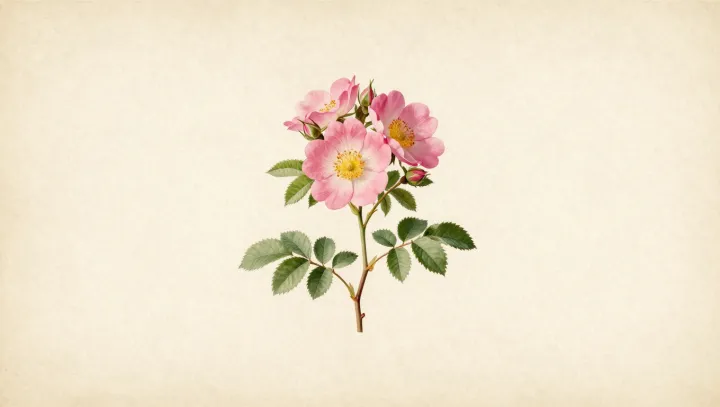
Softness here is not gentle at all. A wild rose operates like a tight contract between attraction and injury, each petal and thorn written into the same legal text of natural selection. Pale pink petals broadcast a visual signal within the spectral ranges that bees detect most efficiently, while their open cup architecture exposes anthers loaded with golden pollen and a concentrated plume of volatile organic compounds that guide insects at distance.
The trap, if one can call it that, is spatial. Petals and nectar guides pull pollinators inward, but the stem zones most accessible to larger herbivores are ringed with rigid thorns formed from modified epidermal tissue, a classic example of mechanical defense. Those spines raise the marginal cost of each bite, so grazers often redirect to less defended plants, leaving enough leaf area for photosynthesis and enough floral tissue for seed set.
The system works because these traits do not evolve alone. Floral pigmentation, scent biosynthesis pathways and thorn density are all tuned by the same fitness metric: reproductive success under pressure from both pollinator behavior and herbivore damage. What looks like a contradiction, a fragile bloom on a barbed stem, is better read as one integrated phenotype balancing signal amplification with damage control.